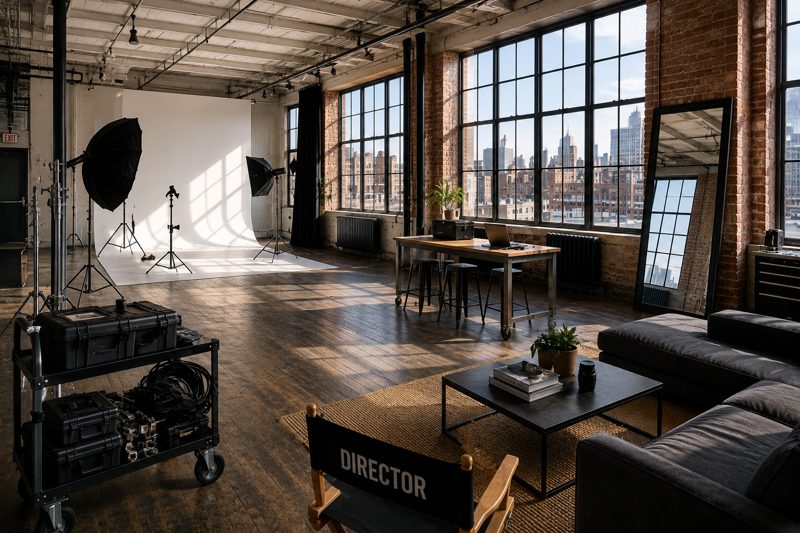
New York City can provide almost any production look within a relatively small geographic area. A crew can photograph a fashion campaign inside a bright SoHo loft, film an interview in a controlled Midtown studio, capture skyline footage from a Brooklyn rooftop, or stage an industrial scene in Long Island City. The range is one reason producers keep returning to the city, but choosing the right location takes more than finding an impressive background. Start with the broader New York City filming locations search, then narrow the options by creative direction, crew size, sound, access, parking, power, and how much control the production needs.
A successful production space must support the work happening behind the camera. Freight access, elevator dimensions, natural light, blackout capability, electrical capacity, equipment storage, holding areas, restrooms, climate control, and building restrictions can affect the day as much as the visual setting. The strongest location is not necessarily the most dramatic one. It is the space that delivers the desired look without forcing the crew to fight the building.
Studios provide the most controlled production environment
NYC studios and sets are usually the strongest choice when consistency and technical control matter more than architectural character. Studios may offer blackout capability, cyc walls, lighting grids, sound treatment, dedicated power, loading access, equipment storage, dressing rooms, hair and makeup stations, and enough open space to reposition cameras and lighting. They work especially well for interviews, product photography, fashion shoots, tabletop work, green-screen productions, livestreams, music performances, and projects that require several lighting setups.
Not every studio provides the same level of support. Some are daylight rooms with high ceilings and minimal equipment. Others operate as complete production facilities with grip rentals, crew parking, freight elevators, sound control, client lounges, and several support rooms. Before booking, confirm what is included in the rental. Ask whether lighting equipment, backdrops, furniture, Wi-Fi, climate control, cleaning, and overtime are included or billed separately. Setup and breakdown time should also be included in the schedule because a ten-hour shoot can easily require a twelve-hour location hold.
Lofts add recognizable New York character
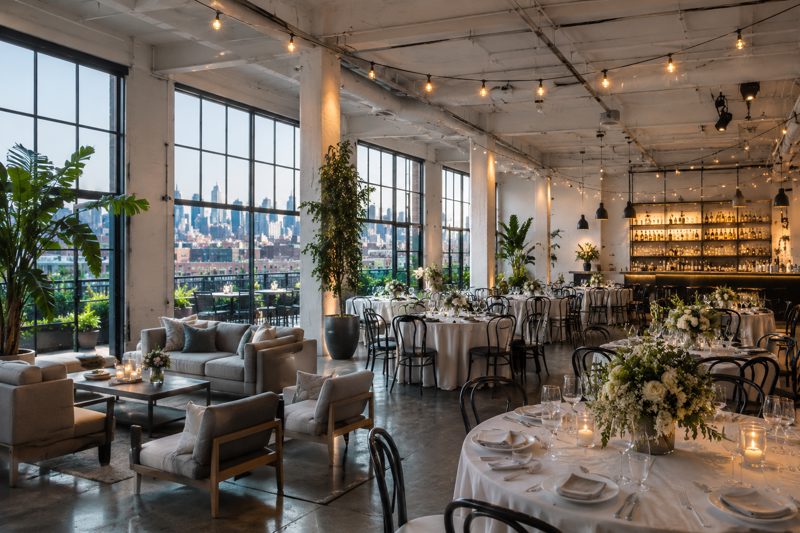
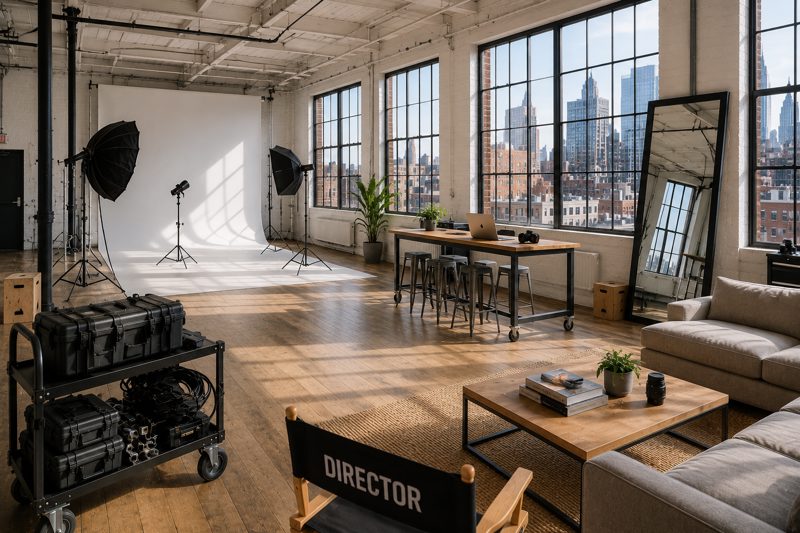
Lofts are among the most recognizable New York production settings. Exposed brick, cast-iron columns, wood floors, large windows, high ceilings, freight doors, and open layouts can create an immediate editorial or cinematic quality. Depending on the furnishings and building, the same loft may read as residential, industrial, artistic, historic, or contemporary. Productions looking for classic downtown architecture can compare SoHo creative spaces and Chelsea production locations, while Brooklyn offers a wider range of converted warehouses and industrial interiors.
The visual appeal of a loft should not distract from its operating limitations. Some loft buildings contain residential tenants, passenger elevators, narrow staircases, or restricted freight hours. Street parking may be limited, and equipment may need to travel through a lobby shared with other occupants. Walk the complete equipment route before confirming the location. Measure doors and elevators when large cases, wardrobe racks, set pieces, or camera equipment must enter the space. Confirm whether the crew can control window light, whether street noise enters the room, and whether furniture may be moved.
Brooklyn and Queens can offer more production breathing room
Brooklyn filming locations are useful when a project needs lofts, warehouses, brownstones, rooftops, restaurants, creative studios, or neighborhood streets with a different rhythm from Manhattan. Williamsburg production spaces can provide polished creative interiors and skyline views. Bushwick filming locations often lean more industrial, colorful, and warehouse-driven. Greenpoint studios and event spaces can offer daylight lofts, converted factories, and quieter blocks near the waterfront.
Queens can be especially practical for larger crews and equipment-heavy shoots. Long Island City production locations can provide studios, warehouses, rooftop views, waterfront perspectives, and faster access to Midtown than many people expect. Astoria also has a long production history and can offer stages, studios, neighborhood exteriors, and access toward northern Queens. Compared with dense Manhattan buildings, some Brooklyn and Queens locations provide easier loading, wider rooms, and more realistic staging areas.
Homes and furnished interiors can reduce art-direction work
Residential productions often need rooms that already feel believable on camera. Apartments, townhouses, penthouses, mansions, and furnished homes can provide kitchens, bedrooms, living rooms, offices, terraces, staircases, and other environments that would be expensive to reproduce on a stage. Search New York City mansions and homes when the project requires a finished residential setting.
The strongest option depends on the story being told. A brownstone can create a historic or neighborhood-focused look. A modern penthouse can support luxury, fashion, finance, or lifestyle content. A family home may be better for commercials and scenes that need warmth rather than spectacle. Residential locations require careful planning because the property was not necessarily designed around a production crew. Confirm where equipment can be staged, which rooms are available, whether floors and walls require protection, and how many people may enter the property.
Ask about restroom access, food, furniture movement, exterior filming, generator placement, sound, pets, neighbors, and the use of common building areas. The crew should also understand whether the host or property representative will remain onsite. Clear rules protect the home while allowing the production to work efficiently.
Rooftops can deliver scale, but weather and sound control the day
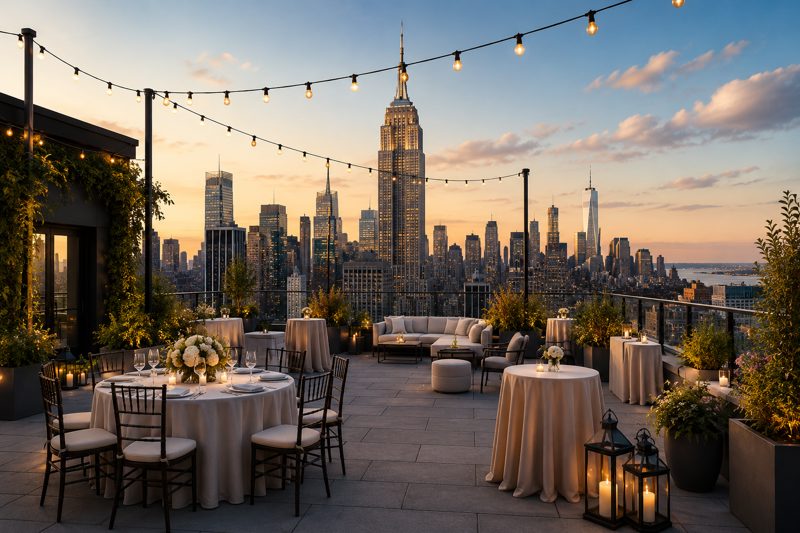
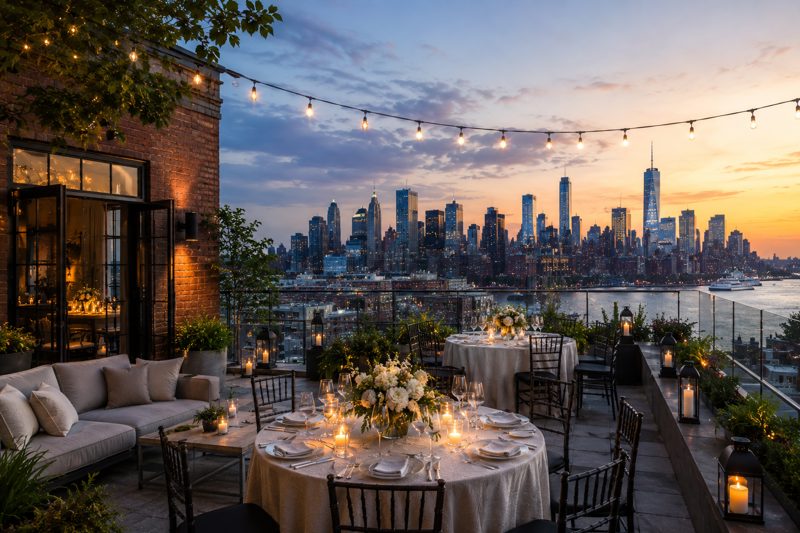
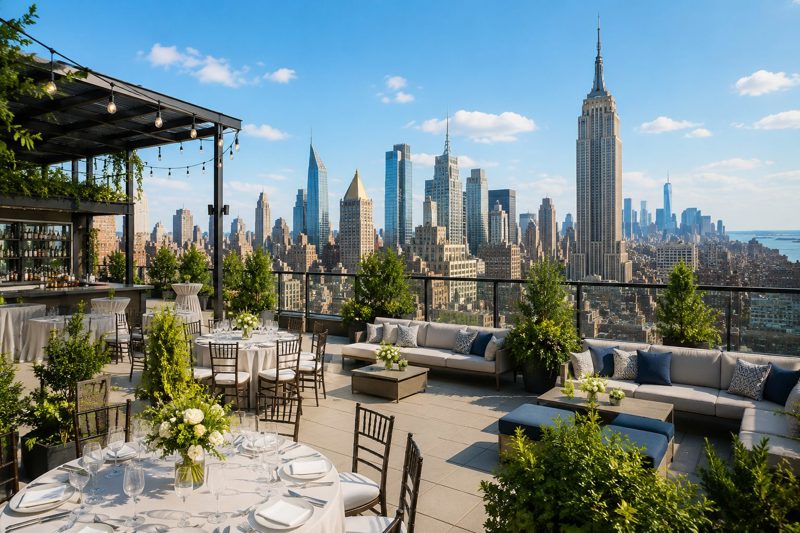
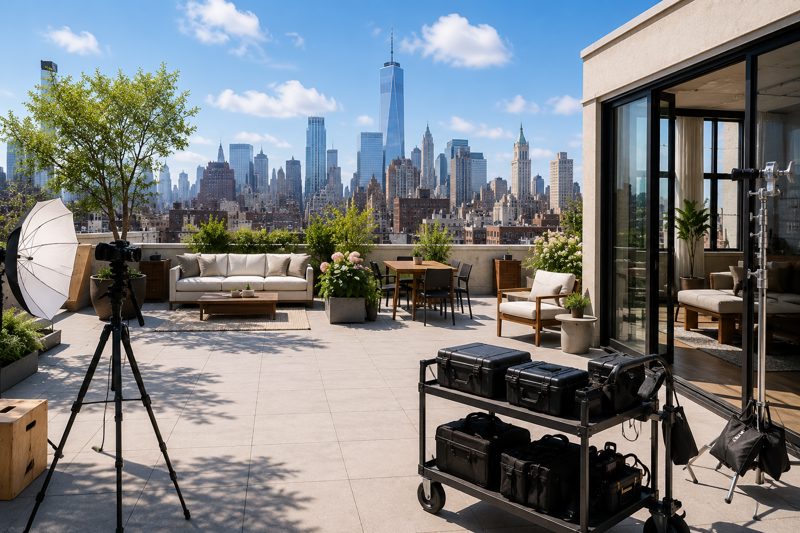
NYC rooftop locations can immediately establish the city through skyline views, bridges, water towers, neighboring buildings, and changing daylight. They work well for fashion, music videos, brand content, interviews, establishing shots, proposals, and hospitality campaigns. A rooftop may appear simple in photographs, but it can be one of the most complicated production environments.
Confirm legal occupancy, elevator access, stair access, roof protection, railing restrictions, power, restrooms, weather backup, wind exposure, and the exact areas available to the crew. Audio can be affected by traffic, aircraft, construction, rooftop mechanical equipment, and wind. Lighting stands and large modifiers may require additional safety measures. Sunset timing should be planned precisely because the useful light window can be much shorter than the total booking.
Galleries and theaters provide finished visual environments
New York City museums and galleries can work for fashion editorials, product launches, interviews, art-focused campaigns, and clean architectural scenes. White walls, polished floors, high ceilings, directional lighting, and minimal furnishings give a production a finished visual framework without requiring a large set build. The main questions are artwork restrictions, floor protection, wall contact, lighting heat, public hours, security, insurance, and whether the gallery can be fully closed to visitors.
NYC theaters are useful when a production needs a stage, auditorium, backstage corridors, dressing rooms, curtains, balconies, theatrical lighting, or an existing audience setup. They can support music videos, performances, interviews, narrative scenes, rehearsals, and promotional content. Confirm whether the house lighting and sound systems are included, whether a venue technician is required, and how much access the crew has to backstage areas.
Sound, access, and holding space matter more than square footage
A large room is not automatically production-friendly. A smaller location with dependable power, controlled sound, a freight elevator, and one good support room may outperform a larger space with constant interruptions. Listen for HVAC noise, elevators, traffic, neighboring businesses, schools, bars, construction, and rooftop equipment. For dialogue, interviews, and live audio, visit at approximately the same time of day as the planned shoot.
Access should be mapped from the vehicle to the set. Confirm where vans may stop, whether permits are needed, how long equipment can remain at the curb, and whether the building requires a certificate of insurance. Determine whether talent, clients, wardrobe, makeup, catering, and equipment can be separated. One secondary room can prevent the main set from becoming crowded and can make the entire day feel more professional.
Build the location schedule around New York realities
New York production days often lose time through elevators, parking, security desks, loading windows, and building rules rather than through the creative work itself. Put the exact access time, freight reservation, crew arrival, equipment load-in, lighting setup, meal period, company move, breakdown, and final exit into the schedule. Do not assume the crew can remain in the building after the booking ends. Some properties charge overtime immediately, while others have a hard cutoff tied to staff, neighbors, or freight access.
Weather should also influence the plan even for an indoor shoot. Rain can slow loading, fill elevators, affect street parking, and create noise on windows or rooftops. Summer heat can make older lofts uncomfortable, while winter conditions can complicate exterior holding and equipment movement. Ask how quickly the space heats or cools and whether the HVAC may remain on during recording.
Choose the location that protects the final image and the workday
Begin with the requirement that cannot fail: the visual brief, sound, crew size, room dimensions, schedule, or neighborhood. Then confirm the New York details that most often change the production experience, including loading, elevators, parking, security, weather backup, power, holding areas, and the exact end time. Once those pieces are clear, the visual decision becomes much easier.
New York City has enough variety to support nearly any film, photo, commercial, interview, music, fashion, or branded-content project. The best shoot location is the one that looks right on camera while keeping the crew, equipment, talent, client, and schedule moving in the same direction.