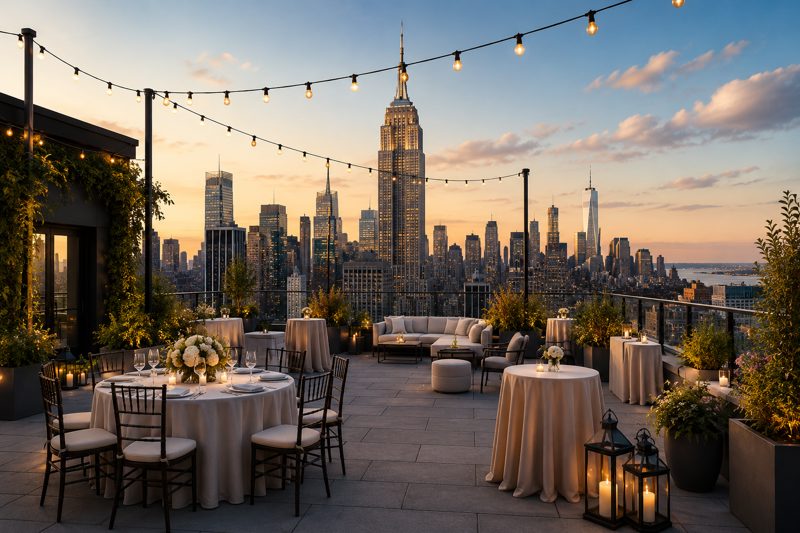
New York City rooftop venues can create an immediate sense of place before the event begins. Skyline views, surrounding architecture, bridges, water towers, neighboring rooftops, and changing daylight can make a dinner, reception, launch, meeting, or photo shoot feel distinctly New York. The best starting point is the broader NYC rooftop venue search, followed by a closer comparison of capacity, weather coverage, elevator access, sound rules, food service, and how much of the experience depends on the view.
A rooftop is not automatically the right choice simply because the photos are impressive. Some terraces are designed for seated dinners, while others work better for standing receptions. Some are attached to restaurants or hotels with full service. Others are private penthouses or flexible event spaces where the planner must bring in most vendors. The strongest venue is the one where the skyline, layout, access, and operating rules support the same event plan.
Open terraces and enclosed penthouses create different experiences
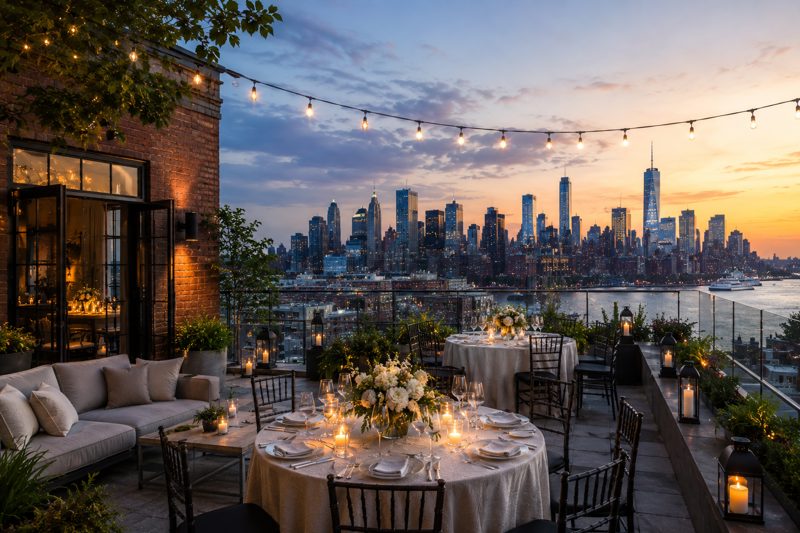
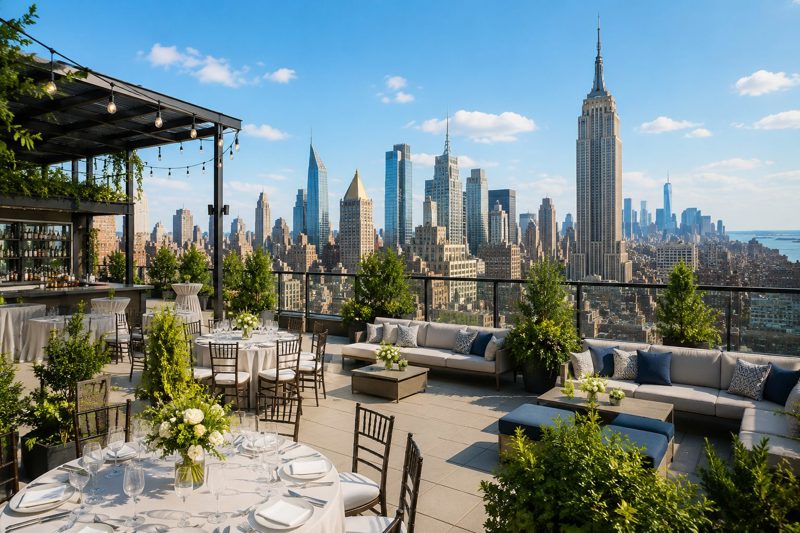
An open-air terrace gives guests the clearest connection to the city. It works well for cocktail receptions, proposals, birthday dinners, fashion events, client gatherings, and sunset photography. The tradeoff is that wind, temperature, rain, and neighborhood sound become part of the plan. A partially covered roof can reduce that risk, but planners should still ask whether the covered area can hold the entire guest count rather than only a small portion of it.
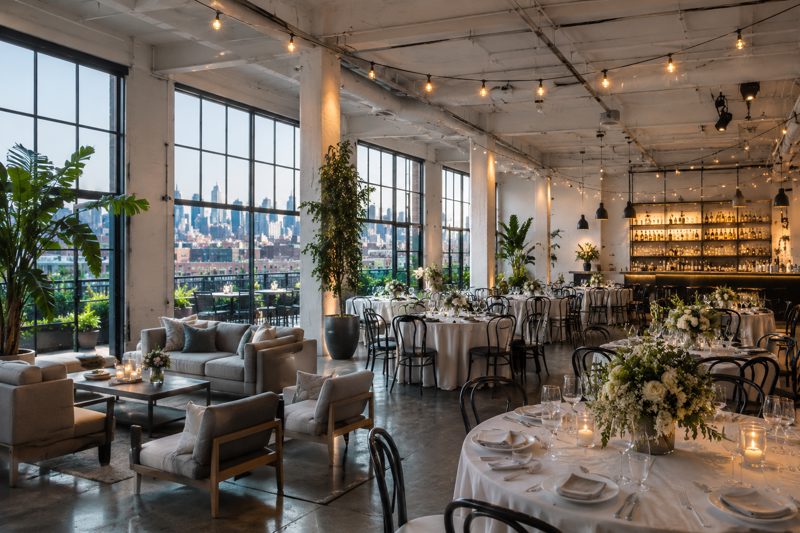
Enclosed penthouse spaces provide more control. They may include floor-to-ceiling windows, private lounges, kitchens, restrooms, meeting areas, or doors that open onto a terrace. These spaces can support year-round bookings and give guests an indoor place to gather without losing the skyline. When the event needs residential character, the search may also include New York penthouses and private homes. The most useful question is not whether the venue has indoor space, but whether the indoor plan still works when the roof cannot be used.
Restaurants and hotels can simplify service
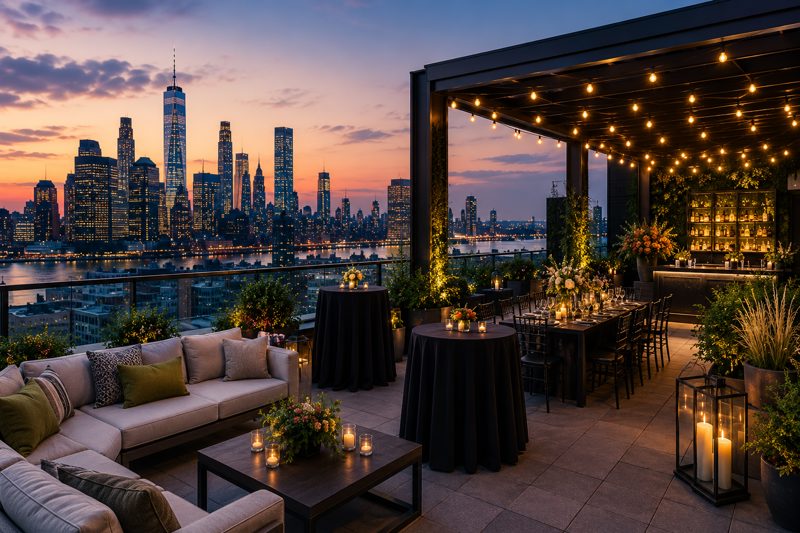
Rooftops attached to restaurants often reduce the number of outside vendors a planner must coordinate. Many provide food, beverages, staffing, furniture, glassware, and a built-in service plan. This can make New York restaurants and rooftop bars especially practical for dinners, engagement parties, birthdays, networking events, and corporate receptions. The main limitations may be menu minimums, beverage packages, fixed furniture, shared access, and restricted setup time.
NYC hotels with event spaces can be useful when guests are traveling, the schedule includes several events, or the planner needs overnight accommodations nearby. Hotel rooftops may also provide stronger staffing, security, elevators, restrooms, and indoor backup than a standalone roof. The tradeoff is that hotel rules can be more structured, and the rooftop may operate as a public bar outside the private-event window. Confirm whether the booking includes a full buyout, a separated section, or only reserved tables.
Rooftops work best when the event format matches the layout
A standing reception can use narrow terraces and multiple conversation areas more effectively than a formal dinner. Seated events need enough uninterrupted floor area for tables, service aisles, bars, entertainment, and guest circulation. A venue that lists capacity for 200 people may feel comfortable for cocktails but crowded for a plated meal. Ask for capacity by layout rather than relying on one maximum number.
For corporate gatherings, New York meeting and presentation spaces may provide a better indoor program area with rooftop access for breaks or the reception. Product launches and brand events may need a presentation wall, reliable power, Wi-Fi, controlled lighting, and room for check-in or displays. Weddings and private celebrations need a clear ceremony, dining, music, and weather-backup plan. The roof should support the event rather than forcing every part of the program into the same exposed area.
Weather planning should be decided before the forecast changes
Weather backup is one of the most important differences between rooftop venues. A strong plan identifies exactly what happens if there is rain, high wind, unusual heat, cold temperatures, or poor air quality. Ask whether the event moves indoors automatically, whether tents or temporary structures are permitted, and whether the indoor area is included in the rental. A backup room that holds only half the guest list is not a complete backup plan.
Season also changes the useful hours. Summer afternoons can be hot and bright, while evenings may remain comfortable after sunset. Spring and fall can provide excellent conditions but less predictable temperatures. Winter rooftops may work when the venue has an enclosed penthouse, heaters, wind protection, or a glass-covered terrace. Ask when shade reaches the roof, where the sun sets relative to the main view, and whether nearby buildings create wind tunnels. Those details affect comfort, photography, furniture placement, and the timing of the event.
Elevators and arrival flow can determine whether the venue feels polished
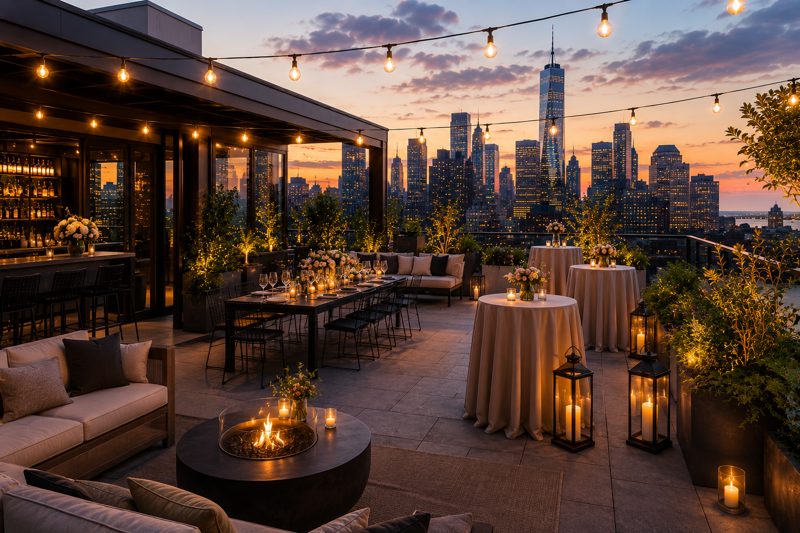
Rooftop events often depend on one or two elevators, and that can create delays when guests, vendors, staff, rentals, and catering all arrive through the same route. Confirm elevator size, freight access, operating hours, security procedures, and whether an elevator attendant is required. Ask how long it normally takes to move the full guest count to the roof and whether anyone must use stairs for the final level.
The arrival experience should also be obvious. Guests need a clear entrance, check-in point, route to the elevator, and plan for coats, gifts, or bags. Vendors need a separate load-in schedule so equipment does not compete with guest arrival. For larger programs, New York event centers may provide more structured access while still offering terraces or skyline-facing spaces. A beautiful roof can feel disorganized quickly when the lobby, elevator, or check-in process has not been planned.
Sound and neighborhood rules shape the evening
Outdoor sound behaves differently above the street. Music may travel toward neighboring residences, and the venue may be required to reduce volume or move entertainment indoors at a specific time. Confirm amplified-music rules, DJ placement, speaker direction, microphone use, last-call timing, and the exact hour outdoor activity must end. Do not assume the booking end time and the rooftop sound cutoff are the same.
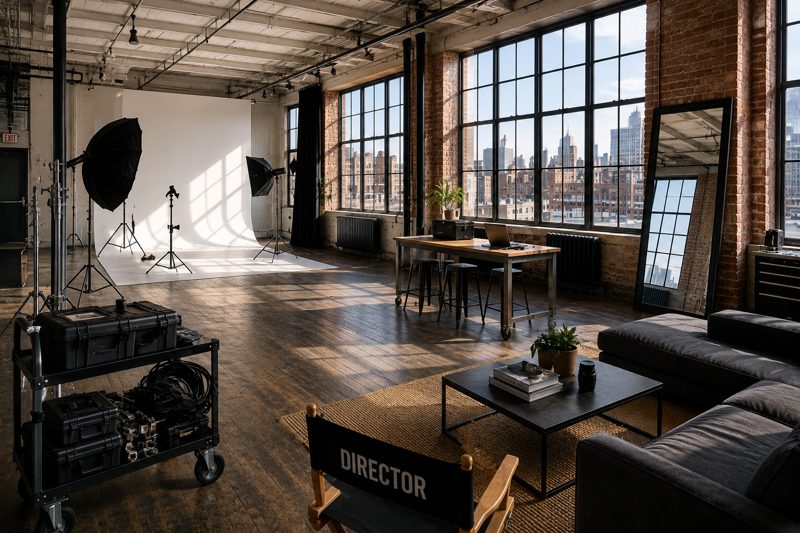
Nearby mechanical equipment can also affect speeches, interviews, and filming. HVAC systems, generators, traffic, aircraft, sirens, and other rooftops may be audible even when the venue feels quiet during a short tour. For dialogue or recorded content, visit at a similar time of day and ask whether building equipment cycles on and off. Rooftops can be excellent for fashion, lifestyle, hospitality, music, and branded content, but the production plan should include wind control, secure lighting stands, power, shade, and a protected area for equipment.
Manhattan, Brooklyn, and Queens offer different rooftop perspectives
Manhattan rooftops place the event within the skyline and often provide close views of surrounding towers, historic buildings, or major landmarks. They can be convenient for hotel guests and corporate groups, but loading, parking, elevator scheduling, and pricing may be more restrictive. The wider New York City venue search can help compare rooftops with penthouses, restaurants, hotels, and indoor spaces nearby.
Brooklyn event venues may provide broader Manhattan views, warehouse character, larger terraces, or a more creative neighborhood setting. Williamsburg and Greenpoint can work well for fashion, weddings, launches, and social events where the skyline is part of the backdrop. In Queens, planners may compare Long Island City venues for waterfront and Midtown-facing perspectives or Astoria event spaces for a more neighborhood-oriented setting. The best borough depends on where guests are staying and which direction the view should face.
Choose the roof for the complete event, not one photograph
Before booking, confirm the seated and standing capacities, indoor-backup capacity, elevator plan, freight access, restrooms, food and beverage rules, furniture, power, lighting, sound cutoff, weather policy, and overtime terms. Ask for photographs of both the primary roof and the backup space. If the venue is being considered at sunset, visit at sunset and observe wind, shade, surrounding noise, and guest circulation.
The strongest NYC rooftop venue is the one where the view and the operating plan reinforce each other. A terrace can create a memorable arrival, a penthouse can protect the schedule, and a restaurant or hotel can simplify service. Once guest flow, weather, sound, and access are resolved, the skyline becomes an asset rather than a source of last-minute complications.