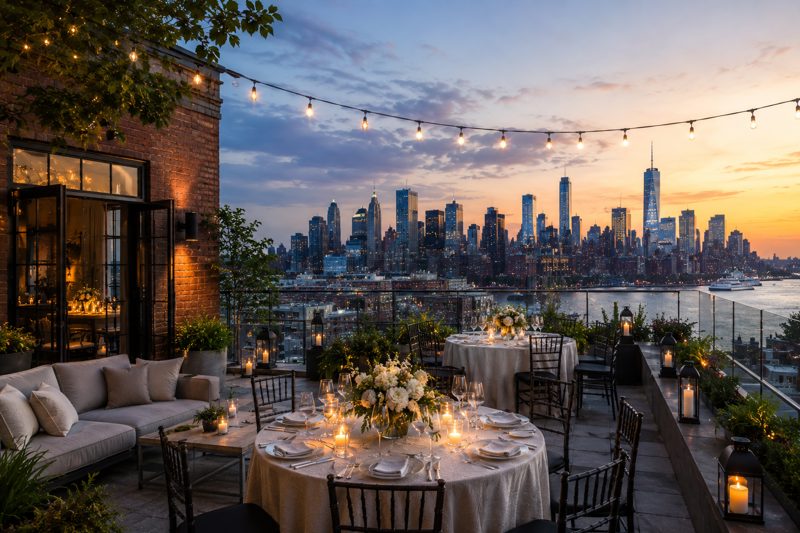
New York City gives planners an enormous range of spaces, but the best event ideas usually begin with the experience rather than the room. A wedding dinner overlooking the East River, a birthday inside an Astoria restaurant, a company gathering near Grand Central, and a product launch in a Bushwick warehouse all ask different things from the venue. The address, building, service model, transportation, and surrounding neighborhood should support the same plan.
The broad New York City event venue search makes it possible to compare polished hotels, private dining rooms, rooftops, lofts, studios, theaters, waterfront properties, and flexible event halls. Instead of starting with a generic search for a beautiful space, decide what guests should remember, how they will move through the event, and which services need to be built into the property. Those decisions narrow the search much faster than choosing a neighborhood from name recognition alone.
Weddings can range from formal ballrooms to relaxed waterfront dinners
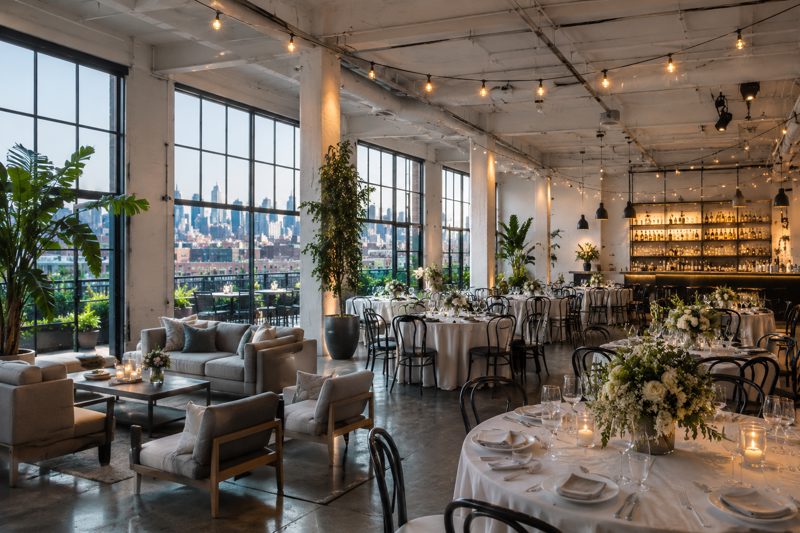
A traditional wedding may benefit from NYC ballrooms and formal reception spaces that already provide catering areas, dance floors, coat storage, professional staffing, and enough room for a ceremony-to-reception transition. Hotels can also make sense when many guests are traveling, particularly when the ceremony, reception, and overnight accommodations can remain under one roof.
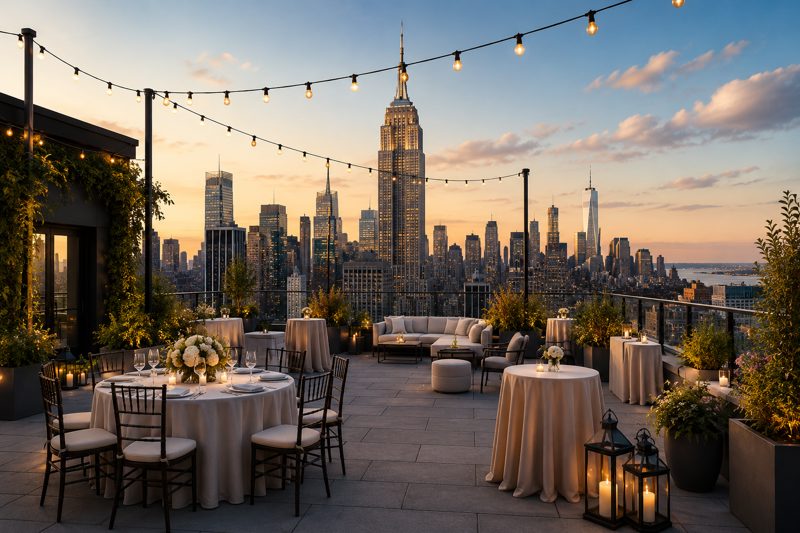
Other couples want the city to feel more present. Waterfront wedding and reception venues can bring bridge views, river light, and the Manhattan skyline into the experience without relying on elaborate decoration. A loft or restaurant may create a more personal dinner, while a rooftop can turn cocktails and sunset into part of the schedule.
Couples comparing neighborhoods should consider wedding venues throughout Manhattan when hotel access, regional transportation, and a central address are priorities. The room should still be judged by guest flow, indoor backup, vendor access, sound restrictions, and how comfortably the final layout accommodates dinner, dancing, photography, and conversation.
Birthdays, showers, and milestone celebrations often work best around food
Private dining rooms and restaurant buyouts can be ideal for birthdays, anniversaries, engagement parties, baby showers, graduation dinners, and family celebrations. Searching NYC restaurants and private event spaces can reduce the number of separate vendors because the kitchen, bar, staff, furniture, glassware, and cleanup are already part of the operation.
The best restaurant format depends on how structured the celebration will be. A seated dinner needs comfortable spacing and room for speeches. A cocktail-style birthday needs circulation, places to sit, and a bar that will not become a bottleneck. A shower may need gift tables, natural light, and enough time for setup before guests arrive. Ask whether the room is fully private, whether music is permitted, and when the space must return to regular service.
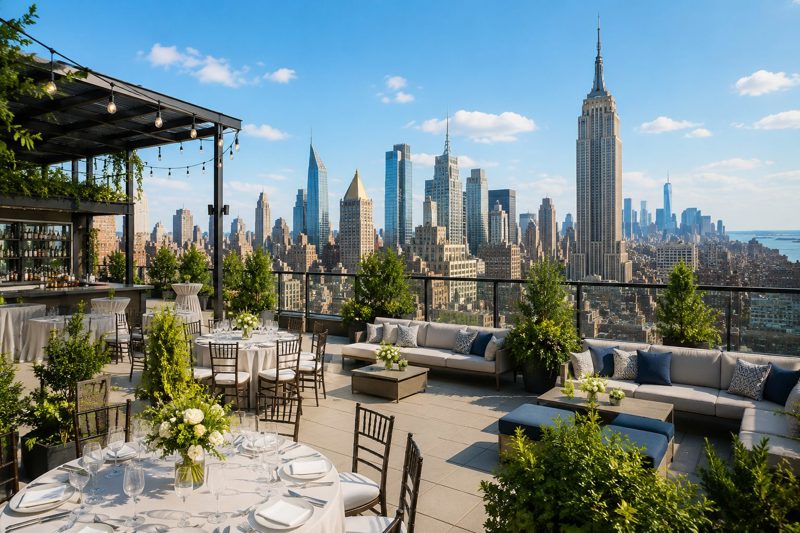
Groups looking for skyline views and an energetic evening may consider rooftop party venues across NYC. For a more neighborhood-driven celebration, planners may look at restaurants and gathering spaces around Astoria, where local dining, residential streets, and a less tourist-centered atmosphere can become part of the event.
Corporate events need a venue that supports the working agenda
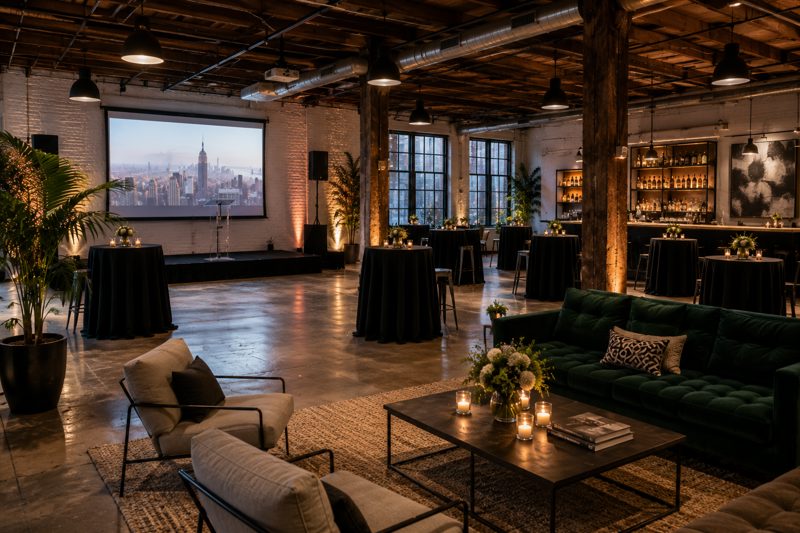
Company gatherings can include executive meetings, training sessions, networking receptions, holiday parties, investor presentations, team dinners, and multi-day conferences. Each format requires a different balance of privacy, technology, hospitality, and social space. A boardroom may work for the presentation and fail during lunch. A dramatic loft may impress guests while creating problems with sound, projection, or breakout conversations.
Teams planning presentations, workshops, and professional programs should begin with meeting and conference spaces across NYC. Confirm screen visibility, dedicated Wi-Fi, microphones, private-call areas, catering access, registration space, and whether the group can remain in the room between sessions.
Midtown Manhattan corporate venues can be especially practical for attendees using Grand Central, Penn Station, nearby hotels, or Midtown offices. Convenience should be measured from the street to the meeting room, including building security and elevator travel. Companies bringing in out-of-town guests may also benefit from New York hotels with event spaces, where lodging, catering, meeting rooms, and staff can be coordinated through one property.
Launches, screenings, and creative events need the right technical environment
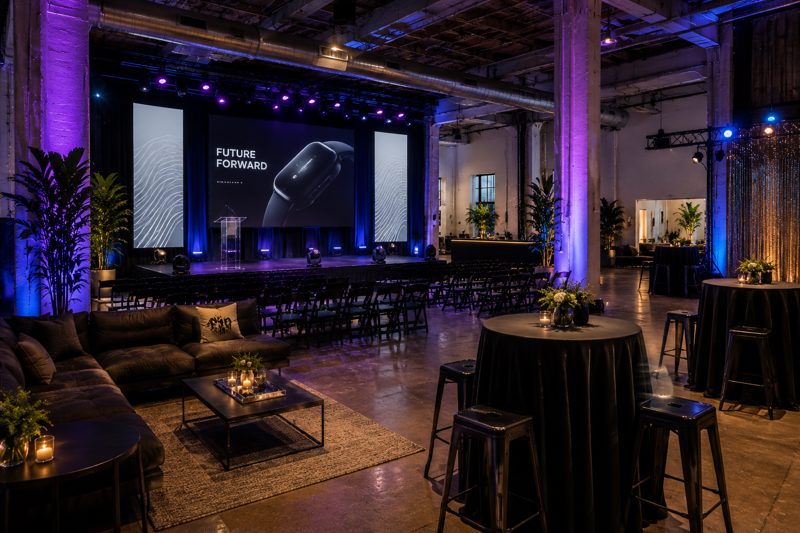
Product launches, fashion presentations, creator events, photography, livestreams, screenings, and branded experiences often require more than an attractive room. Power, rigging, freight access, lighting control, clean sound, equipment storage, internet reliability, and separate support areas can determine whether the day operates smoothly.
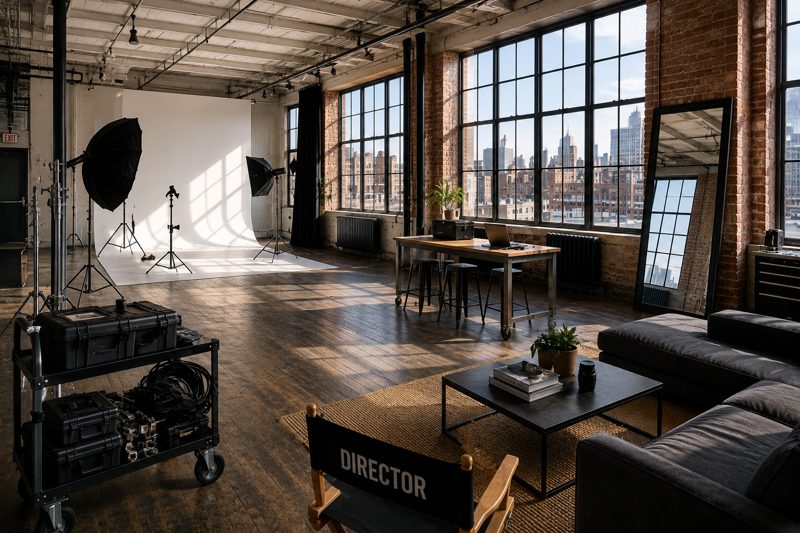
Productions and content teams may start with NYC studios and production spaces rather than trying to transform a restaurant or residential loft into a working set. Studios can provide controlled light, loading access, electrical capacity, makeup areas, green rooms, and room for equipment that guest-focused venues may not accommodate.
Creative teams seeking warehouse scale, murals, raw interiors, or adaptable layouts may compare the search with Bushwick studios and creative venues. Screenings, premieres, talks, comedy events, and performances may fit better inside New York City theaters and screening spaces, where audience sightlines, projection, sound, staging, and backstage circulation are already considered. The right format should reduce production work rather than merely provide an interesting background.
Fundraisers and cultural gatherings should make the setting part of the message
Nonprofit dinners, art events, educational programs, community celebrations, donor receptions, and cultural gatherings often benefit from a venue with an existing identity. A gallery can support a visual program without extensive decoration. A museum can connect the event to history, design, or education. A community hall may offer practical capacity and a closer relationship to the people the event is intended to serve.
Planners can review NYC museums and gallery event spaces when the surroundings should contribute directly to the program. These properties may have exhibition schedules, preservation rules, approved caterers, restrictions on attaching decor, and limited setup windows, so the artistic setting should be evaluated alongside the operating requirements.
For neighborhood programs, workshops, cultural dinners, youth events, and local fundraisers, community gathering spaces across New York City may offer a more practical format. The strongest choice is the venue that feels connected to the purpose of the gathering without making access, staffing, catering, or technical production unnecessarily difficult.
The best event idea is the one the venue can support naturally
Before selecting a space, write down the moments that define the event. A wedding may need a ceremony transition, seated dinner, speeches, and dancing. A birthday may need food, music, lounge seating, and an easy late-night plan. A conference may need registration, presentations, private conversations, and reliable breaks. A launch may need loading, lighting, photography, product displays, and a controlled guest entrance.
Then test each venue against the complete program. Confirm usable capacity after furniture and service areas are placed. Walk the route from the subway or hotel. Locate the freight entrance and elevators. Ask about sound, alcohol, security, insurance, vendor rules, weather backup, setup time, and cleanup. Compare the full cost, including rentals and staffing, rather than looking only at the hourly rate or food minimum.
New York City offers almost every venue style imaginable. The most successful events do not use that variety to make the plan more complicated. They choose the property where the room, building, neighborhood, service model, and event idea already make sense together.