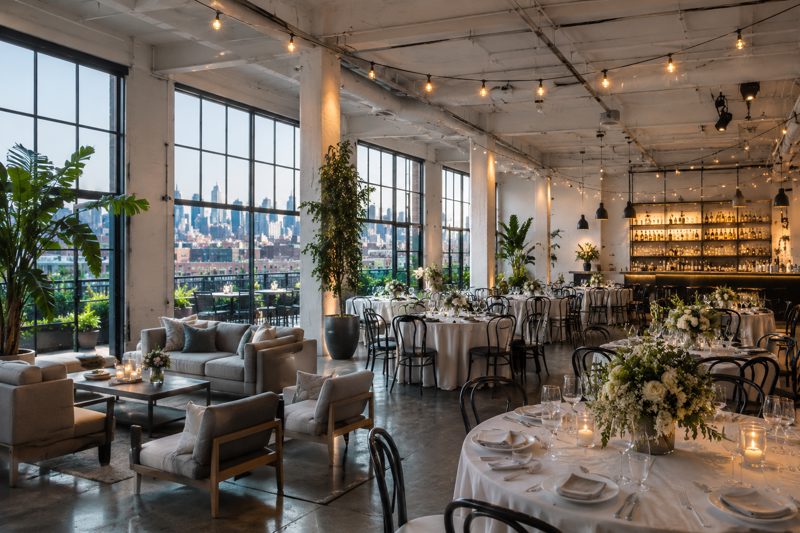
Choosing a New York City venue is not only a matter of capacity and price. The property style shapes nearly every part of the event, including catering, furniture, sound, lighting, guest flow, vendor access, weather planning, and how much work remains after the room is booked. A bright SoHo loft may offer architectural character but require outside rentals. A Midtown hotel can simplify staffing and overnight accommodations while limiting vendor flexibility. A Williamsburg rooftop may deliver the atmosphere immediately, but only when the indoor backup and elevator plan are equally convincing.
The broad New York City event venue search makes it possible to compare these formats in one place. The goal is not to find the most dramatic photograph. It is to identify the venue style that naturally supports the program. A dinner-centered gathering may benefit from restaurants and private dining venues, while a launch, performance, meeting, or production may need an entirely different operating environment.
Raw lofts offer flexibility, but flexibility creates more decisions
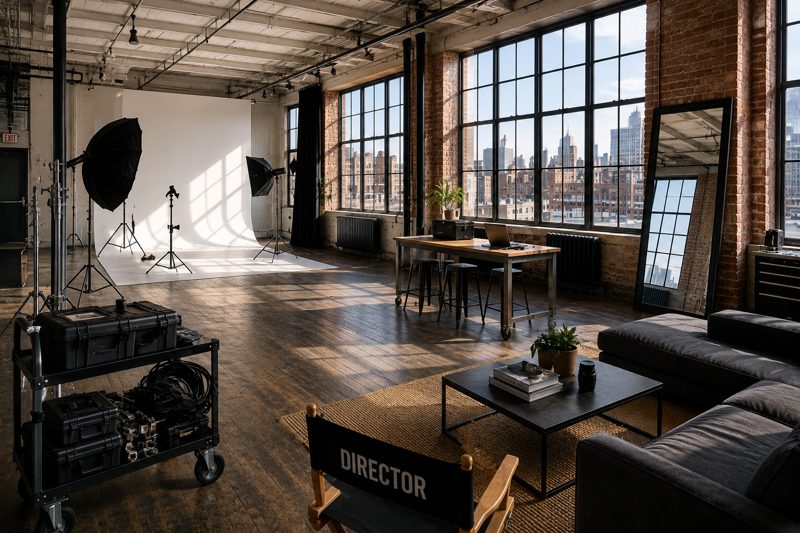
Lofts appeal to planners who want tall windows, exposed brick, wood floors, cast-iron columns, open layouts, and the freedom to shape the room around a particular idea. Downtown properties can feel residential, industrial, editorial, or gallery-like depending on the building. Events searching for classic cast-iron architecture may begin with lofts and creative spaces around SoHo. Groups that want loft character alongside hotels, restaurants, nightlife, and waterfront access may compare the experience with Williamsburg event spaces.
A blank room is not automatically an inexpensive room. Tables, chairs, linens, lighting, sound, catering equipment, staffing, coat storage, security, and cleanup may all need to be arranged separately. Older buildings can also have narrow elevators, residential tenants, limited electrical service, or tightly controlled freight hours. Before choosing a raw space, calculate the complete production cost and walk the path every vendor will use. The best loft provides creative freedom without turning basic operations into an improvised system.
Restaurants and hotels reduce coordination by providing built-in service
Restaurant buyouts and private dining rooms work especially well when food, hospitality, and conversation are the center of the event. They can simplify staffing, glassware, furniture, table settings, kitchen access, alcohol service, and cleanup. The tradeoff is that the existing dining layout may leave less room for dancing, presentations, exhibits, registration, or a separate cocktail area. Always ask whether the room becomes completely private, whether other guests share the entrance, and how long the space remains available after the meal.
Hotels with event and meeting spaces can combine guest rooms, catering, ballrooms, breakout areas, and professional staff under one agreement. They are useful for conferences, weddings, executive programs, and events drawing people from outside the city. Around Midtown Manhattan hotels and venues, guests may also benefit from access to Grand Central, Penn Station, Broadway, and major office districts. The convenience can come with approved-vendor requirements, service charges, rigid catering packages, and limited freedom to alter the room.
Studios and event centers solve different operational problems
Studios are designed around control. Productions, interviews, fashion shoots, product photography, livestreams, and branded content often need dependable power, freight access, lighting options, clean sound, equipment staging, and private support areas. Searching NYC studios and production spaces may be more productive than trying to convert an attractive residential or hospitality property into a working set.
Event centers address a different need. They are generally better suited to guest-facing programs requiring substantial capacity, several rooms, formal seating, exhibits, registration, catering areas, or a large reception floor. Planners can review event centers across New York City when a restaurant feels too confined and a raw loft requires too much infrastructure.
For both formats, Long Island City venues and production facilities deserve consideration. The area can combine Manhattan access with commercial buildings, skyline views, studios, hotels, and more practical equipment movement. A property that is slightly farther from the guest's first-choice neighborhood may still produce a much smoother working day.
Rooftops and outdoor venues need a complete indoor plan
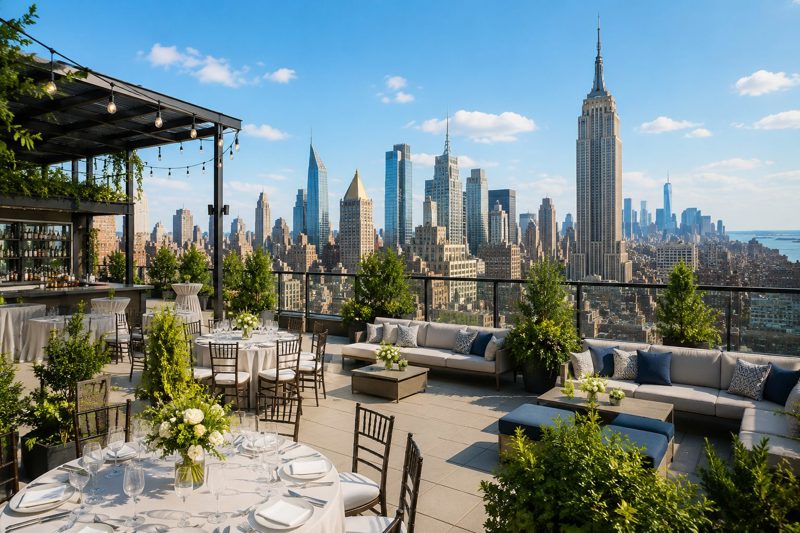
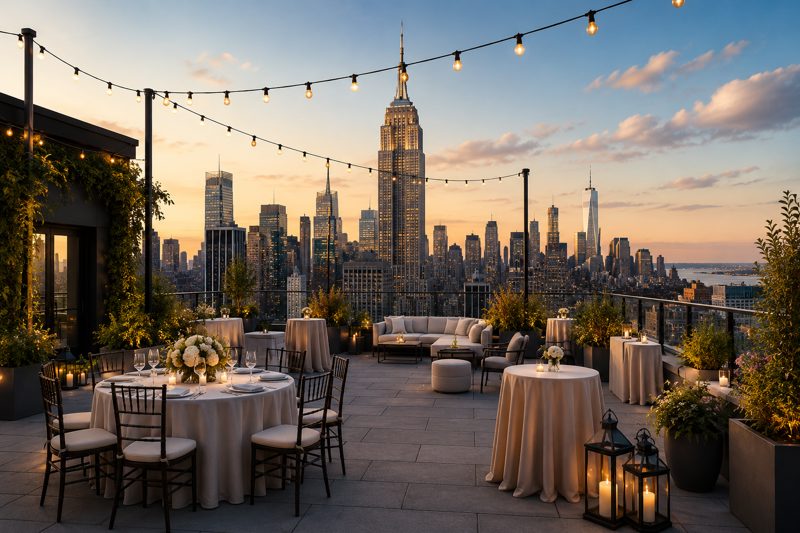
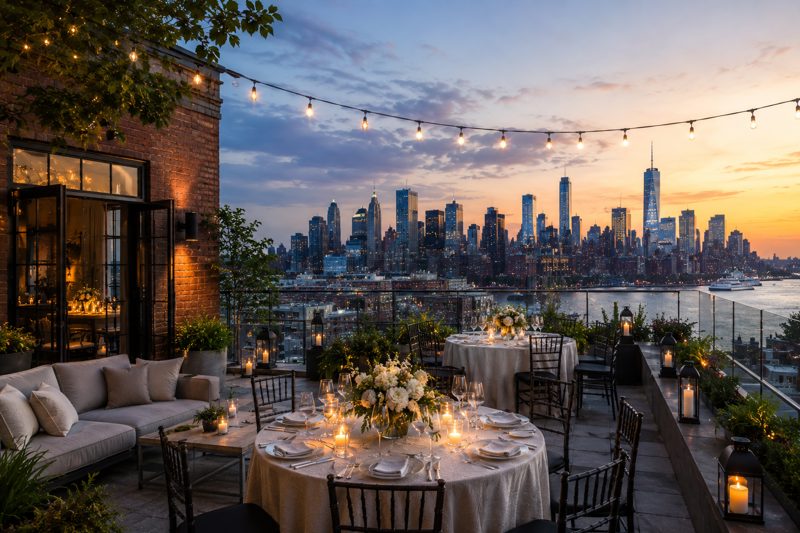
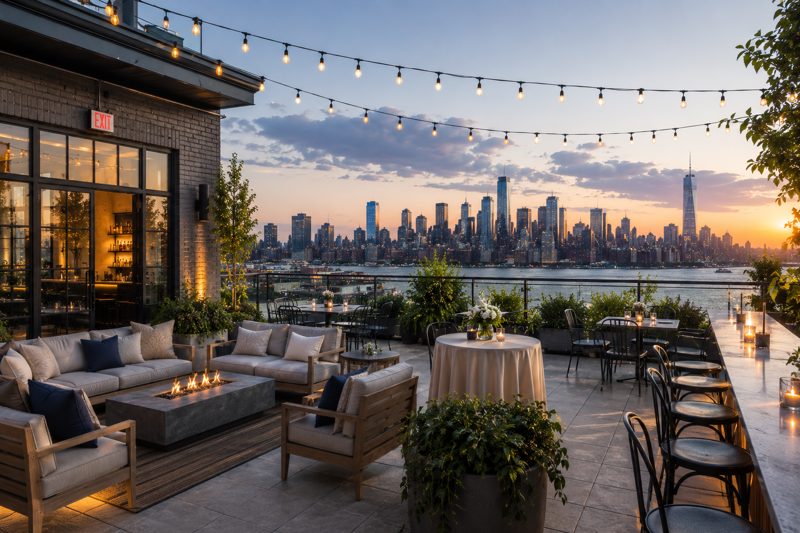
Rooftops can establish the atmosphere before a single decoration is installed. Skyline views, water towers, bridges, river scenery, and evening light make them attractive for cocktail parties, weddings, company celebrations, launches, and private dinners. Browse rooftop venues throughout NYC when the outdoor setting is central to the event rather than a small secondary feature.
The practical questions are just as important as the view. Confirm wind exposure, shade, heating, elevator capacity, restroom access, sound restrictions, catering distance, and the time required to move every guest indoors. The indoor room should hold the full event comfortably, not merely provide temporary shelter. The same principle applies to gardens, courtyards, patios, and outdoor spaces.
Planners who want waterfront atmosphere with an industrial neighborhood character may look at Greenpoint rooftops and creative venues. Its mix of converted buildings, neighborhood restaurants, studios, and East River surroundings can create a different experience from a polished Manhattan terrace.
Theaters and galleries give the event a built-in point of view
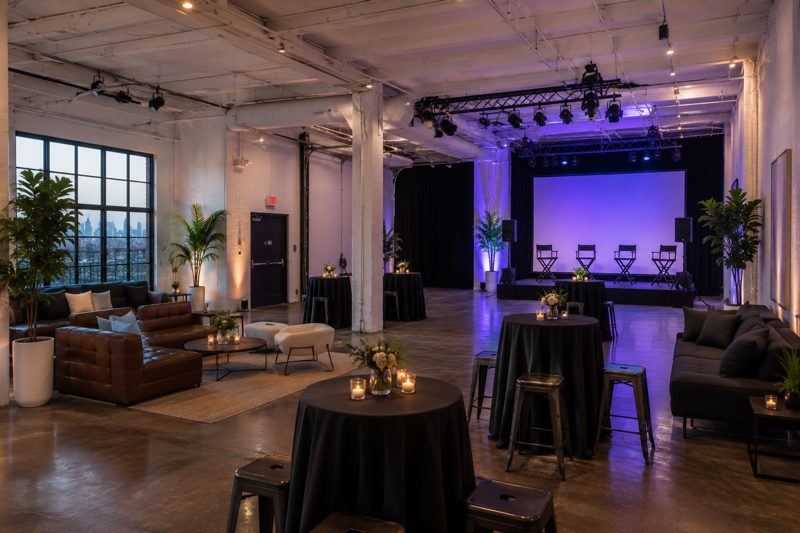
Theaters are useful when the audience needs to face one focal point. Screenings, talks, performances, award programs, premieres, lectures, and company presentations can benefit from fixed seating, a stage, projection, sound equipment, backstage access, and controlled lighting. Search theaters and performance venues in NYC when audience sightlines and technical presentation matter more than an open reception layout.
Galleries create a different experience. White walls, polished floors, high ceilings, and an existing connection to art and design can suit exhibitions, dinners, fashion presentations, fundraisers, and brand events. The visual simplicity may require additional lighting, furniture, acoustic treatment, and guest services. Availability can also depend on exhibition schedules and restrictions on moving artwork or attaching decor.
Chelsea galleries and event spaces are especially relevant for programs that benefit from West Chelsea's concentration of art, former industrial buildings, the High Line, and nearby hospitality. Before booking any cultural venue, confirm installation rules, mandatory technicians, sound-check access, backstage space, public queuing, and whether another program shares the building.
Choose the venue style by working backward from the event
Start with the moments that must happen successfully. Where will guests arrive and check in? Does the program require a stage, seated dinner, dance floor, breakout rooms, private conversations, outdoor access, or equipment holding? Will vendors need a freight elevator? Can the event continue unchanged if rain removes the rooftop or courtyard? Does the room still feel comfortable after tables, bars, catering stations, lighting, photography, and circulation are added?
Then compare the complete cost rather than the rental price alone. A raw loft may become expensive after rentals and staffing. A restaurant may include most services but restrict layout and timing. A hotel may cost more while eliminating transportation and lodging problems. A studio may look plain to guests but save hours of production work. A rooftop may create immediate impact while requiring a second indoor plan.
The right NYC event venue style is the one that reduces friction while reinforcing the purpose of the gathering. Architecture and atmosphere matter, but the strongest room is ultimately the one that lets guests, vendors, staff, and organizers move through the event without fighting the property.