Los Angeles corporate events can range from a twelve-person strategy session to a product presentation, investor dinner, holiday party or networking night with hundreds of guests. Those events may all be called corporate, but they need very different rooms.
A board meeting needs quiet, dependable Wi-Fi and a screen everyone can see. A client dinner needs service and a room that feels finished before anyone arrives. A networking event needs circulation, several places to gather and enough bar access that one line does not become the center of the evening. A company celebration may need a stage, DJ, lounge furniture and room for people to stay after the formal program ends.
The broad Los Angeles corporate and networking venue search is the right place to see the range. From there, the fastest way to narrow the list is to decide what people will actually be doing, where most attendees are coming from and which parts of the event you want the venue to handle for you.
Start with the format, not the headcount
Capacity is useful, but it can be misleading. A room that legally holds 150 people may work well for a seated presentation and feel cramped for 150 people moving between cocktails, food stations and conversations. The same room can feel too large for a 50-person executive dinner if the layout leaves everyone scattered around the edges.
Write the basic schedule before you start comparing venues. Will guests sit for most of the event? Is there a presentation? Does the room need to switch from meeting mode to dinner? Will people arrive all at once or drop in over two hours? Does the company want a branded stage, product displays or a casual environment where employees can simply talk?
Once the event has a shape, the venue type becomes much easier to choose.
Meeting spaces are usually the right answer when work is the main event
An offsite, training day, workshop or leadership meeting does not need to pretend it is a gala. It needs comfortable seating, good sight lines, reliable internet, power where people actually sit and enough acoustic control that everyone can hear the person speaking.
Los Angeles meeting spaces for corporate events are worth comparing when the program is built around presentations, collaboration or small-group work. A purpose-built meeting room can also save money by already including tables, chairs, monitors, whiteboards or conferencing equipment that would have to be rented elsewhere.
The details still matter. Ask whether the Wi-Fi is shared with the rest of the building, whether guests need security check-in, how early the organizer can enter, whether outside catering is allowed and where people can step away for a private call. A room can look polished in photos and still be frustrating if twenty laptops are fighting for outlets around one wall.
Event centers give larger programs more room to change shape
When a corporate event has several phases, a more flexible floor plan becomes valuable. Registration may need one zone, a presentation another, dinner a third and a reception space where guests can move around afterward.
Los Angeles event centers for corporate and networking events can work well for company anniversaries, awards nights, larger meetings, launches, recruiting events and programs with substantial staging. The advantage is not simply size. It is the ability to control how the room works.
Before booking, ask what is included. Some event centers come with furniture, basic sound and staffing. Others are closer to a blank room. Compare the finished cost instead of the rental rate alone. Lighting, AV, security, bars, tables, chairs and overtime can change the budget quickly.

Restaurants and hotels solve two different kinds of business hospitality
For client dinners, executive gatherings and smaller company celebrations, a restaurant can remove much of the event infrastructure from the planning process. The kitchen, service staff, bar, tables and atmosphere already exist.
Los Angeles restaurants and bars for corporate events are especially useful when food and conversation are the main reasons people are gathering. Private rooms can feel substantial with a smaller guest list, and full buyouts can create a more social company event without requiring the organizer to build a hospitality operation for one night.
Hotels are stronger when travel is part of the equation. Los Angeles hotels for corporate events can keep sleeping rooms, meetings, meals and receptions in one place. That is useful for sales meetings, executive retreats, multi-day programs and events where attendees are flying in from other cities.
Compare food and beverage minimums, service charges, guest-room commitments, parking, AV policies and outside vendor rules. A hotel may cost more on paper and still be the simpler option if it eliminates several separate contracts and a transportation plan.
Networking events need circulation more than rows of chairs
A good networking room gives people reasons to move. One bar at the far end of a long room can create a line. A single cluster of sofas can turn into a private island. A completely empty warehouse can leave guests standing in the middle wondering where they are supposed to settle.
Think in small zones: arrival and check-in, drinks, food, high-top tables, softer seating and one quieter area where people can actually hear each other. The venue should make it easy to join a conversation and just as easy to leave one without crossing the whole room.
If the company wants an activity built into the night, Los Angeles entertainment venues for corporate events can help. Live performance spaces, game-oriented venues, theaters and other entertainment properties give employees or clients something to share beyond a drink and a name tag.
That format can be particularly effective for team celebrations, wrap events, employee appreciation nights and groups where not everyone already knows each other.
Studios are useful when the company wants the room to look like the brand
Los Angeles has a large supply of studio and production-oriented spaces, which can be an advantage for corporate events that need more visual control. A studio can support projection, custom lighting, a branded set, livestreaming, product displays, interviews or a presentation that needs a more deliberate technical setup.
Los Angeles studios for corporate events can work for media days, creator events, presentations, branded dinners and internal programs where a standard hotel meeting room would feel too generic.
The operational checklist is important. Confirm bathrooms, HVAC, guest seating, internet, power, catering access and parking. Production spaces are often designed around crews rather than dressed-up guests. A roll-up door is great for equipment and much less charming if it is also the main entrance for the CEO and clients.
Rooftops and outdoor venues can make a company event feel less corporate
Sometimes the goal is simply to get people out of the conference room. Los Angeles makes that relatively easy.
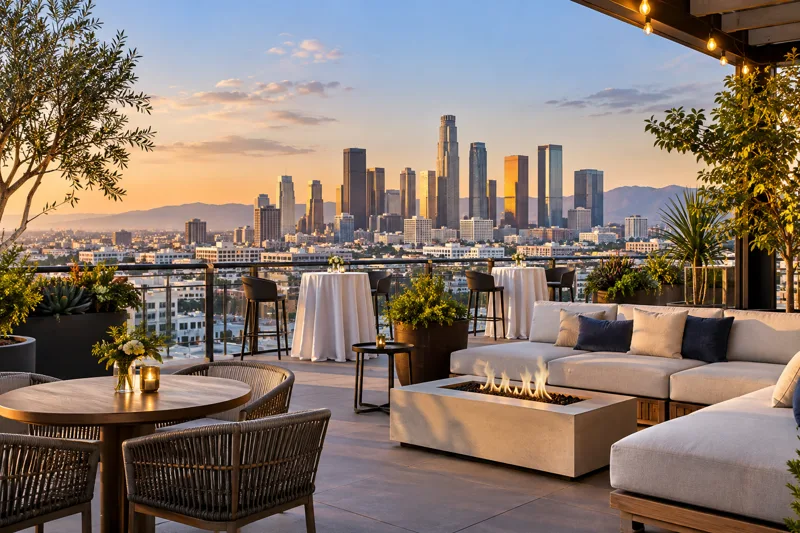
Los Angeles rooftop venues for corporate events work well for cocktail receptions, client nights, company milestones and networking events where the view can provide much of the atmosphere. Downtown, Hollywood and the Westside create very different experiences, so the VenueMagnet guide to Los Angeles rooftop event venues is useful when the skyline, neighborhood and guest geography are part of the decision.
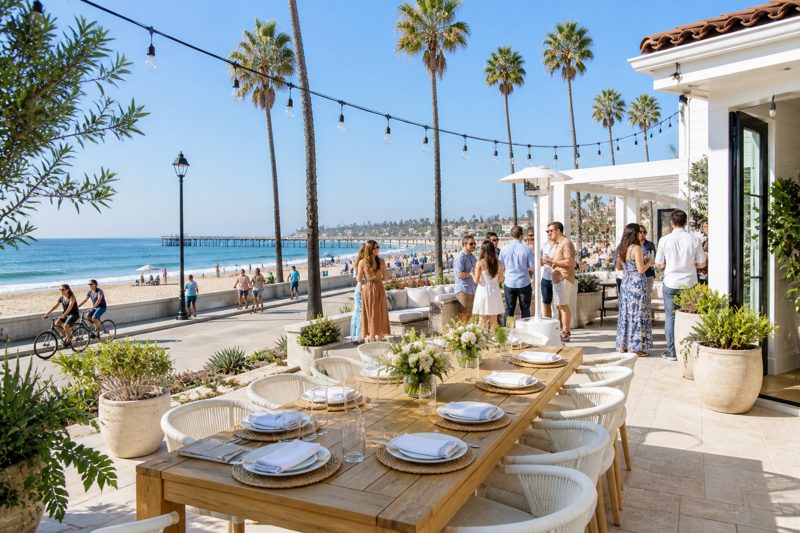
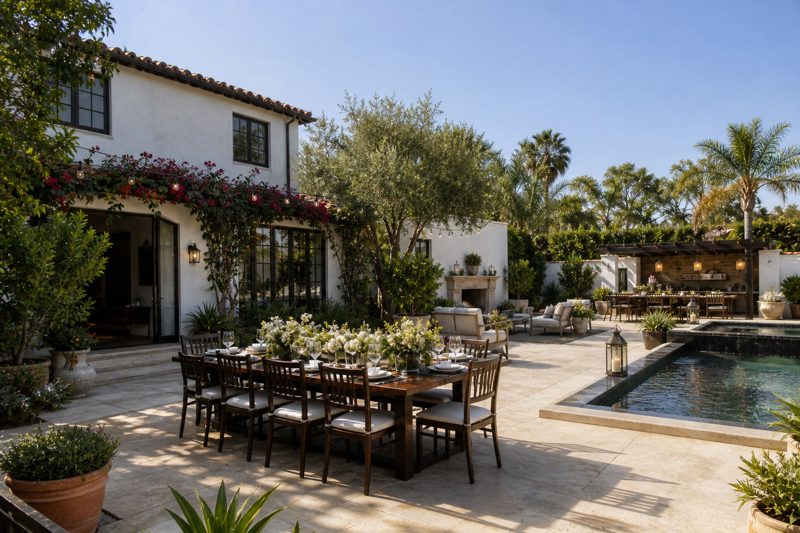
Los Angeles outdoor venues for corporate gatherings widen the options to patios, gardens, courtyards, lawns and indoor-outdoor properties. They can work for daytime team events, brand dinners, wellness-oriented programs and company gatherings that are intentionally more relaxed.
Neither format should be booked without a weather plan. Wind can matter on a roof even when the temperature is comfortable at street level. Outdoor events need shade, heating or cooling depending on the season and time of day. Ask what happens if the weather changes and whether the backup space is actually large enough for the full group.

Ballrooms still make sense when the program needs structure
Ballrooms are sometimes dismissed as the predictable option, but predictability can be useful. A large company dinner, awards program, annual meeting or holiday event may need a stage, formal seating, service aisles, a dance floor and enough back-of-house support to keep hundreds of guests moving on schedule.
Los Angeles ballrooms for corporate events are designed around those needs. The room can usually be divided, reset and serviced in ways that are harder at a private house or unconventional creative space.
Do not use the published maximum capacity as the planning number. A ballroom that technically holds 500 people may feel crowded once a stage, AV control, buffet, bars, sponsor displays and lounge furniture take up part of the floor. Ask the venue for a layout using your actual program.
Los Angeles geography should be part of the business case
For corporate events, the best-looking venue is often less important than the venue that keeps people from losing an hour in transit. If most guests are staying near LAX, moving them across town for a morning meeting may not be worth it. If the attendee base is concentrated around Downtown, Hollywood or the Westside, choosing near that cluster can simplify arrival and improve turnout.
The VenueMagnet guide to event spaces near LAX for meetings, brand events and productions is useful when airport access is a major part of the program. For local groups, map where employees or clients are coming from and look at the real arrival hour before deciding that one neighborhood is central.
Also consider what happens after the formal program. A restaurant district, hotel cluster or walkable nightlife area can extend the event without adding another organized transfer. A remote property may provide more privacy but require every guest to drive or use rideshare at the same time.
Walk the venue once as an attendee and once as a vendor
A final site visit should test the operating plan rather than confirm that the room is attractive.
- Arrival: Where do guests park, use valet or get dropped off? Is check-in obvious?
- AV: Who supplies screens, microphones, speakers, lighting and technical support?
- Internet: Is there enough dedicated bandwidth for the actual number of devices or a livestream?
- Loading: Where do catering, furniture, staging and production teams unload?
- Timing: How early can setup begin, and what is the overtime rate?
- Food and beverage: Are there minimums, required caterers or bar packages?
- Parking: Does the parking plan still work when another event is happening nearby?
- Breakouts: If smaller sessions are part of the program, are those rooms truly private and close enough to use?
For a broader logistics checklist, the VenueMagnet guide to planning a private event in a rented venue covers guest flow, vendor access, parking, sound, setup and cleanup in more detail.
The right corporate venue should remove work from the day
A strong Los Angeles corporate venue does more than hold the guest count. It supports the way the event is supposed to function.
A meeting space should make the work easy. A restaurant should make hospitality easy. An event center should make staging and flow easy. A hotel should simplify travel. A studio should give the company creative control. A rooftop or outdoor venue should add atmosphere without creating a weather problem. A ballroom should keep a larger program organized.
Start with the format, choose the geography, and then compare the spaces that solve those two decisions best. In Los Angeles, there are enough venue types and neighborhoods that a company should rarely have to force the event into a room that creates more problems than it solves.