Los Angeles is a good city for weddings partly because it does not force every couple into the same kind of venue. A ceremony can happen in a private garden, a reception can take over a restaurant, a mansion can keep the whole day on one property, and a rooftop can turn the skyline into most of the décor. There are also ballrooms, hotels, studios, warehouses and dedicated event centers when the plan needs more structure.
The harder part is narrowing the choices. A venue that looks perfect in photographs may create a difficult day if guests are crossing the city at rush hour, vendors have nowhere to unload, or the ceremony and reception require a long reset in the same room. Before comparing chandeliers, pools or skyline views, decide what the day actually needs to do.
The broad Los Angeles wedding venue search is the right starting point when you want to see the full range. From there, the fastest way to build a useful shortlist is to choose the kind of wedding you are planning and the part of Los Angeles where the day should happen.
Choose the part of Los Angeles before you fall in love with the room
Geography has more influence on a Los Angeles wedding than couples sometimes expect. If most out-of-town guests are staying on the Westside, a beautiful venue deep in the Valley may turn every part of the weekend into a transportation plan. If both families live east of Downtown, moving everyone to the coast can create the same problem in reverse.
Think about the full sequence: hotel, getting ready, ceremony, reception, after-party and the next morning. A venue that keeps several of those pieces close together can make the weekend feel much easier even if another property photographs slightly better.
This is especially important if the ceremony and reception are at different locations. A five-mile transfer in Los Angeles can be trivial or miserable depending on the hour and the route. If you are considering multiple neighborhoods, compare them during the real arrival window instead of relying on a quiet midday drive.
Private homes and gardens work best when the property is part of the experience
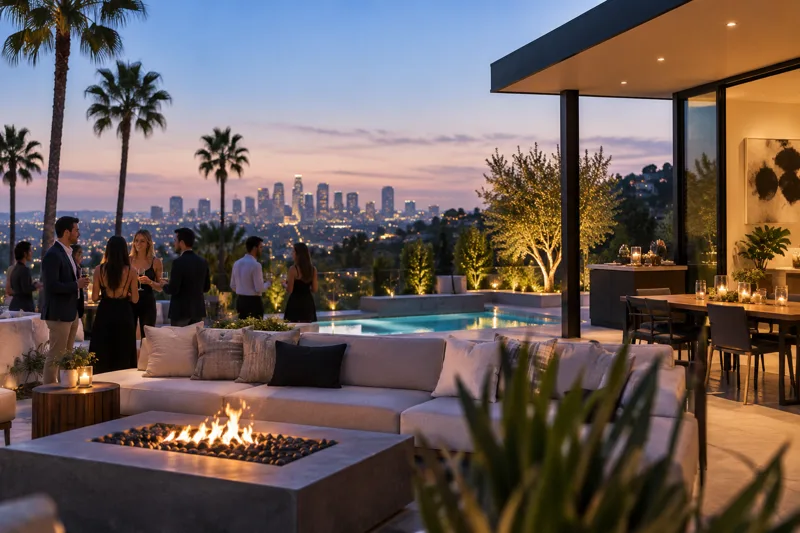
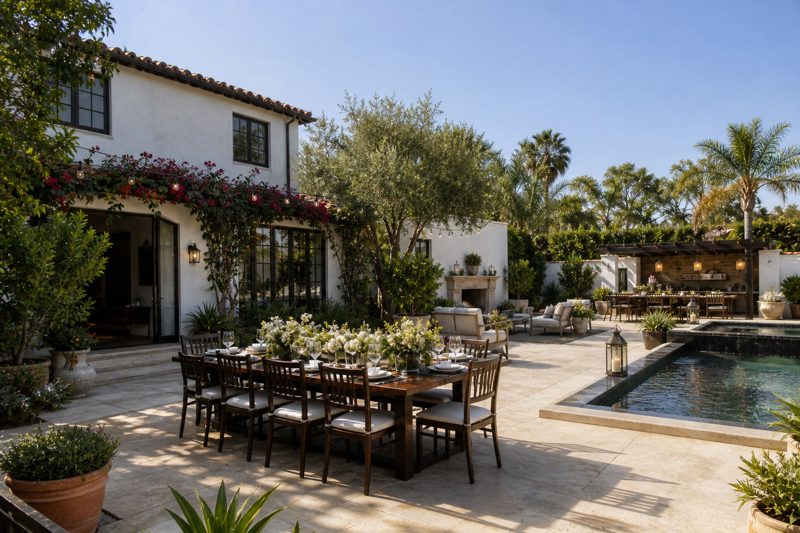
A residential wedding feels different from a traditional event hall. Guests may arrive through a garden, move into a living room or courtyard for cocktails, eat outside, and end the night around a pool or terrace. The house itself gives the day a sense of privacy and can make a smaller wedding feel more personal.
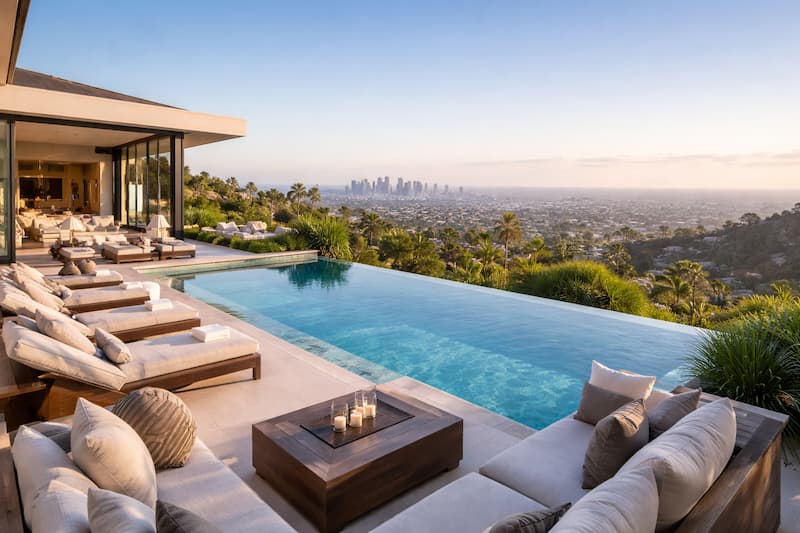
For that style, compare Los Angeles houses and mansions for weddings. A home can work especially well for micro weddings, ceremonies with a dinner reception, and events where the couple wants several furnished areas instead of one large room.
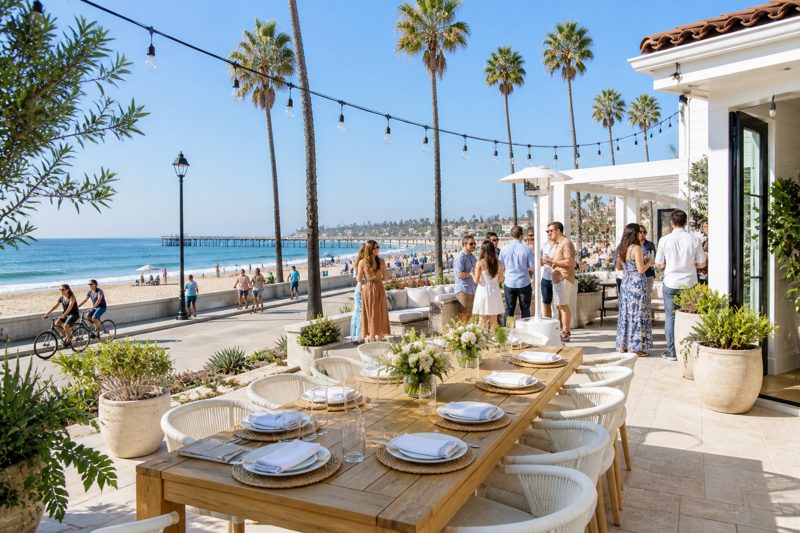
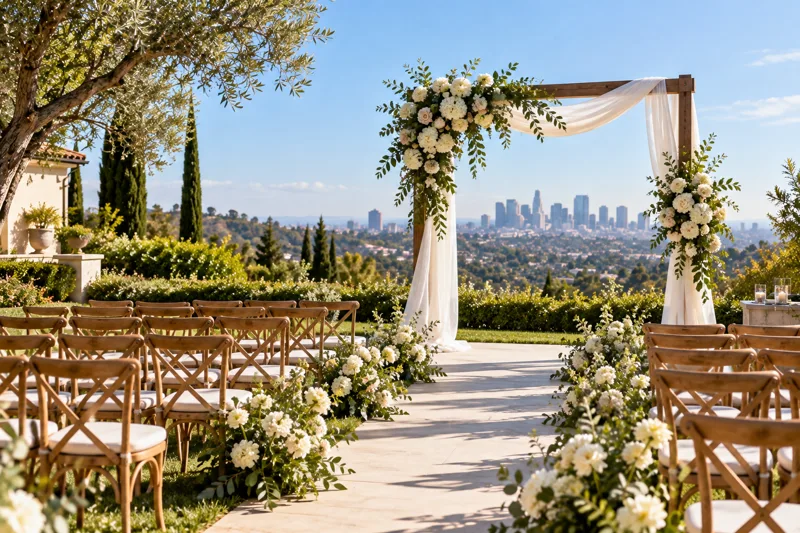
If the outdoor setting matters more than the house, the Los Angeles outdoor wedding venue search includes gardens, patios, courtyards, terraces and other open-air properties. Our guide to residential areas in LA for private events and house rentals can also help when the neighborhood and house style are part of the decision.
Residential venues need a more serious logistics check. Ask where the catering team works, how many cars can actually park, whether valet is realistic, where rental trucks unload, when outdoor music has to end and whether the property has enough restrooms for the guest count. A great backyard is not automatically a great wedding venue if every vendor has to carry equipment down a steep staircase.
Restaurants are a strong choice when the meal matters more than a blank canvas
Some couples do not want to build a venue from scratch. They want great food, a finished room, professional service and a bar that already works. That is where Los Angeles restaurants and bars for weddings become especially useful.
A restaurant can be ideal for a reception after a ceremony elsewhere, a rehearsal dinner that grows into the main celebration, or a smaller wedding where conversation and dinner are the center of the night. Private dining rooms and full buyouts can also make a 40- or 60-person guest list feel intentional instead of undersized.
The important questions are different from those at a house or ballroom. Ask whether the room is completely private, whether there is space for dancing, what the food and beverage minimum includes, whether a cake can be brought in, how late the bar can stay open and what happens if the dinner runs long. A restaurant wedding is easiest when the couple likes what the venue already does rather than trying to make it behave like a banquet hall.
Event centers and studios give you more freedom to design the reception
When the wedding has a detailed floor plan, custom lighting, a large dance floor, stage, lounge areas, photo installations or a strong décor concept, a flexible room may make more sense than a finished restaurant.
Los Angeles event centers for weddings are generally the more straightforward version. They are built around groups and tend to make it easier to understand where dinner, dancing, bars, staging and vendor support will go.
Los Angeles studios for weddings can offer a more creative alternative. High ceilings, open floors, industrial details and controllable lighting can work for couples who want the room to look very different by the time guests arrive. Studios can also be useful when photography, projection, staging or entertainment is a major part of the night.
The tradeoff is that flexible spaces may require more rentals. Confirm tables, chairs, kitchen access, restrooms, air conditioning, power, parking, sound rules and cleanup responsibilities before comparing prices. A lower hourly rate can disappear quickly if nearly everything in the finished room has to be brought in.
Hotels and ballrooms reduce moving parts for larger or more formal weddings
Hotels solve a problem that becomes more valuable as the guest list gets more complicated. Out-of-town guests can sleep where the wedding happens, the wedding party has rooms for getting ready, catering is already integrated and the couple does not have to create a transportation plan between several locations.
That makes Los Angeles hotels for weddings worth comparing for destination-style weekends, larger family groups and events where convenience matters as much as personality.
For a more traditional reception structure, Los Angeles ballrooms for weddings can make dinner, speeches and dancing easier to organize. Ballrooms are not automatically formal or old-fashioned. Their real advantage is infrastructure: predictable seating layouts, service access, lighting positions, dance-floor space and staff accustomed to large events.
Do not compare these properties only by the room rental. Ask about service charges, food and beverage minimums, parking, valet, guest-room commitments, overtime, outside vendors and what décor can stay in place overnight. A hotel package can look expensive at first and still be simpler than coordinating the same services separately at a raw space.
Rooftops are memorable, but the backup plan matters as much as the view
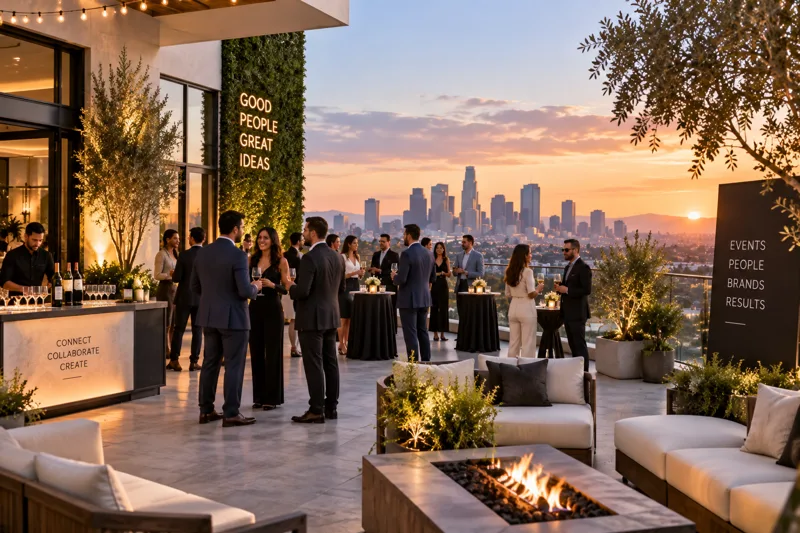
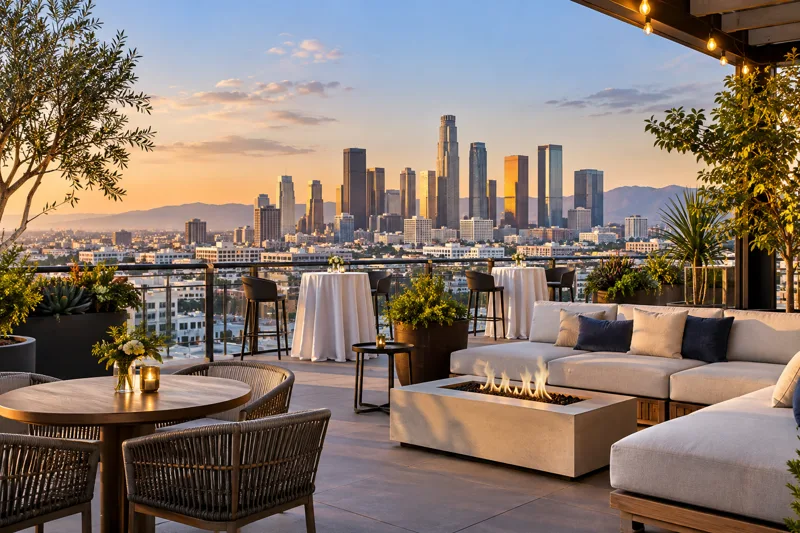
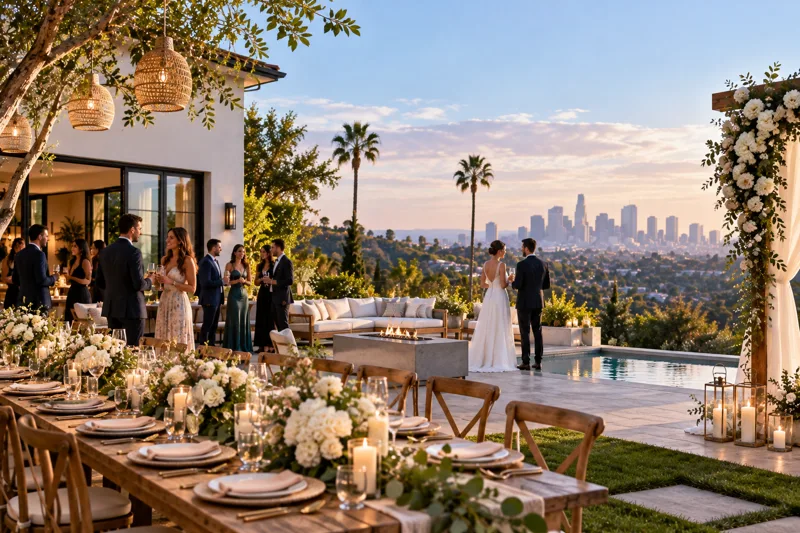
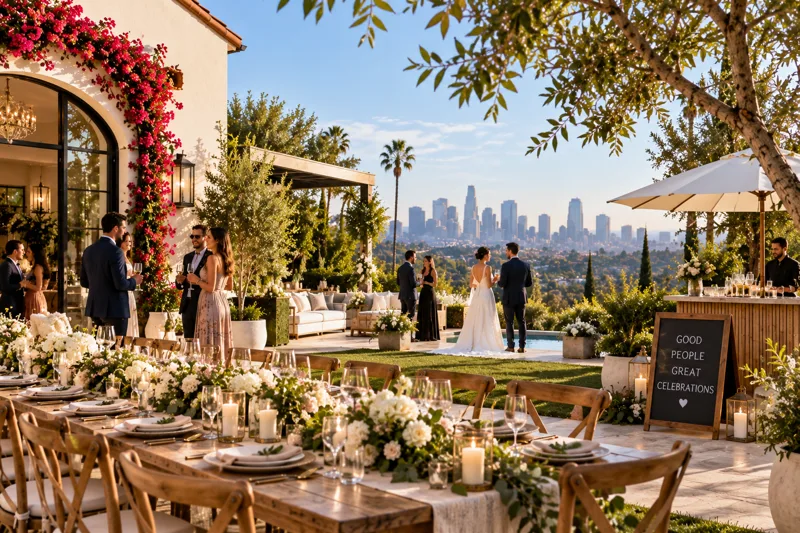
A rooftop wedding can feel unmistakably Los Angeles. Skyline views, sunset light and an open-air cocktail hour can give the day an immediate sense of place. Couples planning that kind of event can compare Los Angeles rooftop wedding venues.
The practical side is just as important. Ask how guests reach the roof, how many elevators are available, what happens in strong wind, where catering stages, whether amplified music is permitted outside and what the indoor weather backup actually looks like. A backup room that holds only half the guest list is not a real backup.
Downtown, Hollywood and the Westside also create very different rooftop experiences. The VenueMagnet guide to Los Angeles rooftop event venues compares those areas in more detail. For a wedding, choose the rooftop because the setting works with the guest geography and operating plan, not simply because the sunset photograph is impressive.
Decide whether the ceremony and reception should share one venue
Keeping both parts of the wedding on one property can make the day much easier. Guests arrive once, vendors stay in one place and nobody has to calculate another drive between the ceremony and cocktails. The challenge is the room flip.
If the ceremony and reception use the same space, ask exactly how the changeover works. Where do guests go while chairs move? How long does the reset take? Who is responsible for it? Can cocktails happen in a courtyard, patio, lobby or second room while the main space changes?
A two-location wedding can still work beautifully when the locations solve different needs, such as a ceremony in a meaningful religious setting followed by dinner at a restaurant or hotel. The key is to make the transfer deliberate. Build enough time into the schedule, give guests clear instructions and avoid a route that depends on perfect traffic.
Walk the venue like a guest and a vendor before signing
The final site visit should be less romantic than the first one. Stop looking only at the ceremony backdrop and walk through the actual day.
- Arrival: Where do guests park, use valet or get dropped off? Is the entrance obvious after dark?
- Capacity: How many people fit after tables, dance floor, DJ, bar, buffet and lounge furniture are actually in place?
- Vendors: Where do catering, rentals, florals and entertainment unload? Are there stairs or freight elevators?
- Weather: If any part of the wedding is outside, what is the real indoor backup for the full guest count?
- Sound: When must outdoor music stop, and are there separate rules for DJs, bands or amplified ceremonies?
- Timing: How much setup and cleanup time is included, and what is the overtime rate?
- Food and alcohol: Which vendors are required, what can be brought in, and who handles permits or service?
- Comfort: Are there enough restrooms, shade, heat, air conditioning and accessible routes for the people attending?
The VenueMagnet guide to planning a private event in a rented venue goes deeper into guest flow, vendor access, parking, sound, setup and cleanup. Those details matter even more for a wedding because so many vendors and family members are working on the same timeline.
The best Los Angeles wedding venue is the one that makes the day feel simpler
A mansion, garden, restaurant, studio, hotel, ballroom and rooftop can all produce a beautiful wedding. The right choice depends on which one supports the actual plan with the least friction.
If privacy and atmosphere matter most, a house or garden may win. If dinner is the centerpiece, a restaurant can remove a lot of work. If the couple wants to build a custom environment, an event center or studio offers more control. Hotels and ballrooms are strong when guest logistics and service infrastructure matter. Rooftops are hard to beat when the view is worth building the evening around.
Choose the part of Los Angeles first, then choose the property type, and only then start comparing the finer details. When the venue fits the geography, guest list, vendors and schedule, the wedding has a much better chance of feeling easy from the first arrival to the last ride home.