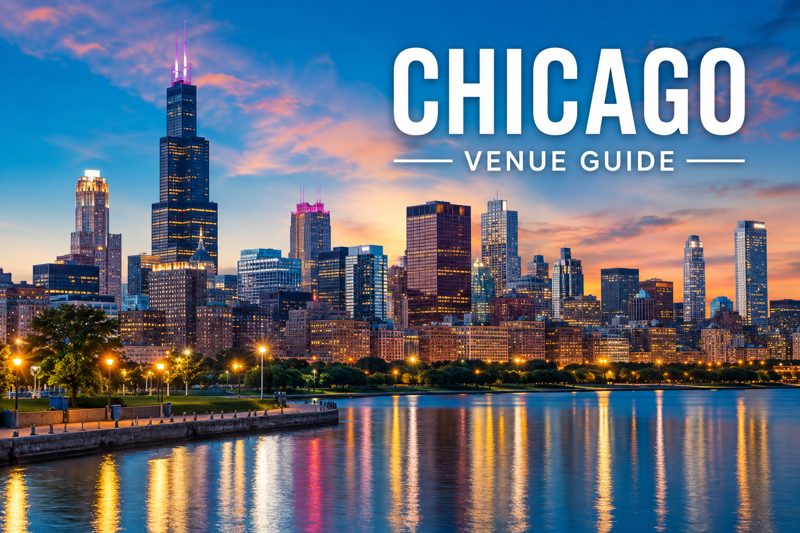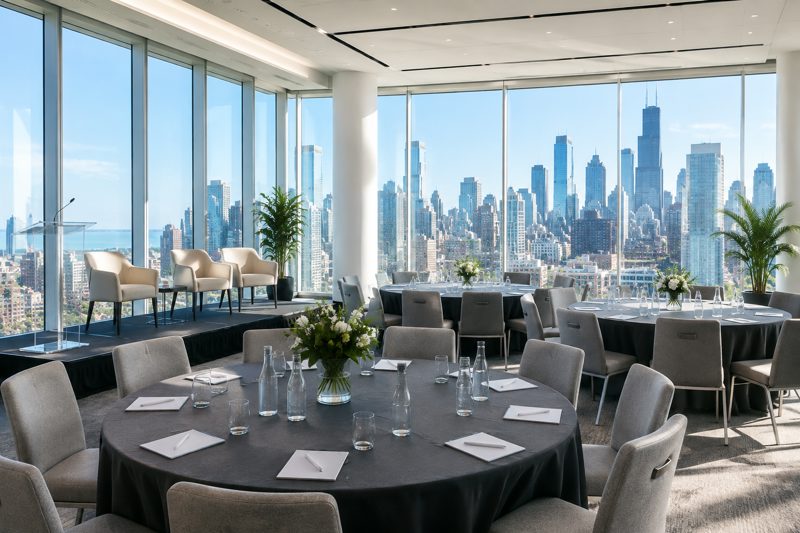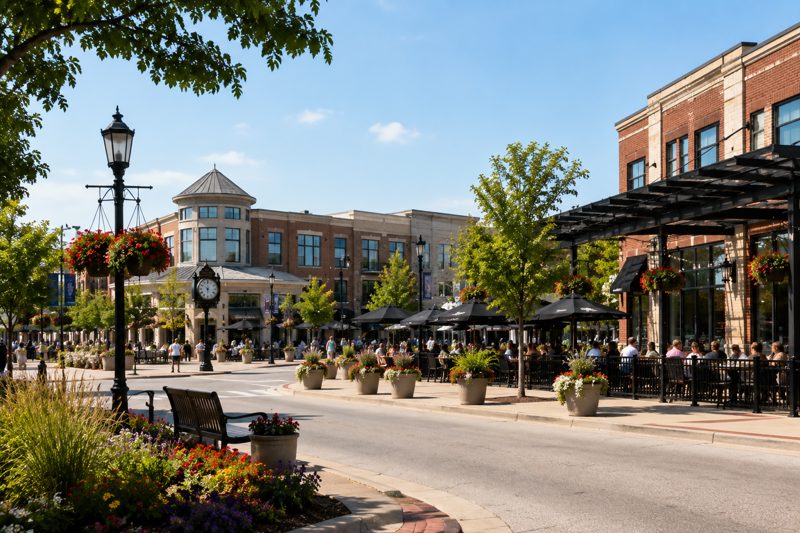
Chicago is large enough that choosing the right part of the metro area can matter almost as much as choosing the room itself. A downtown reception for hotel guests, a family celebration near the western suburbs, a company dinner near O'Hare, and a wedding with guests spread across several suburbs may all point to different venue markets. Start with the broader Chicago venue search when the city itself is part of the experience, but do not assume that a Chicago address is automatically the easiest answer for every guest list.
The strongest area usually solves two problems at once: it gives the event the right setting and reduces unnecessary travel. That can mean keeping visitors near downtown hotels, choosing a suburban location with easier parking, staying close to an airport, or moving the event closer to where most guests already live. Around Chicagoland, the useful comparison is not city versus suburbs in the abstract. It is which area makes arrival, departure, lodging, food, vendors, and the actual event schedule work with the least friction.
Chicago works best when the city is part of the reason people are attending
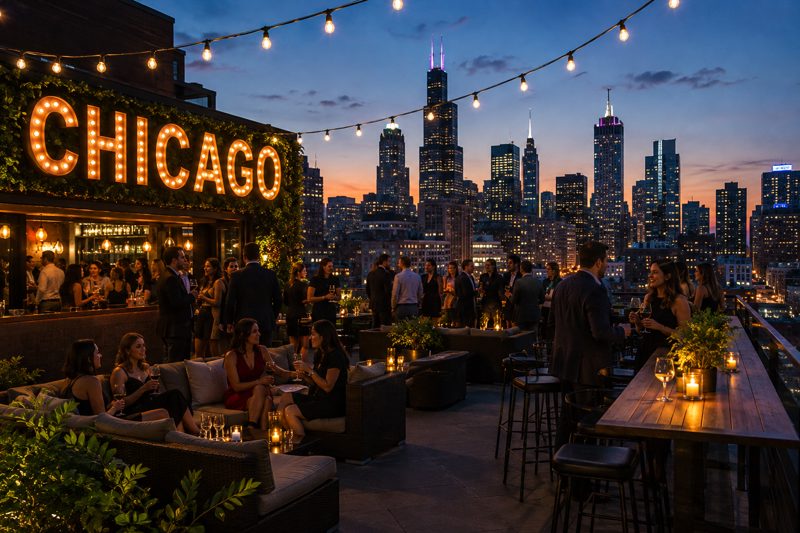
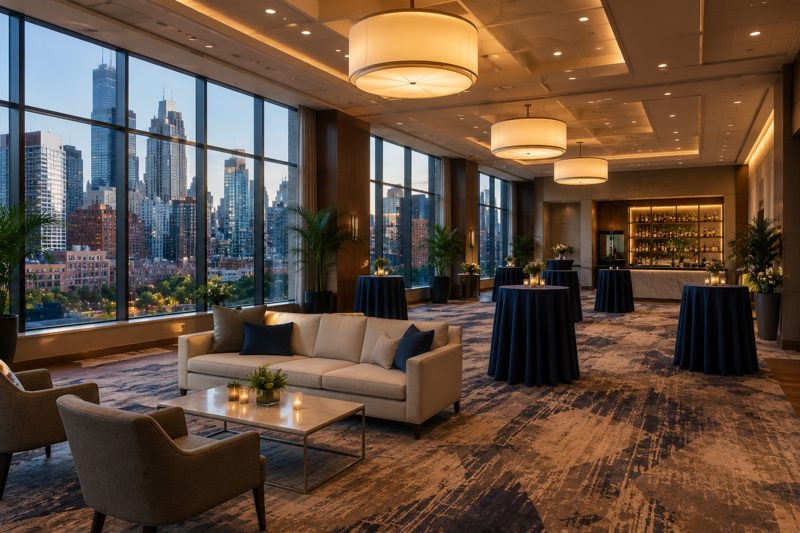
Downtown and neighborhood venues can make sense when guests are staying in the city, public transportation is useful, restaurants and nightlife are part of the plan, or the skyline and urban setting add real value. Chicago also has the deepest overall inventory in the region, so planners can compare restaurants, rooftops, event centers, ballrooms, hotels, studios, theaters, and unusual spaces without leaving the city. The tradeoff is that parking, loading, traffic, and hotel-to-venue transportation can become part of the event plan.
For large social gatherings, the city can offer more variety than a suburban search. For corporate events, it can put the event closer to downtown offices, hotels, and client entertainment. For productions, Chicago can offer visual diversity within a relatively compact area. The important question is whether guests actually benefit from being in the city or whether everyone is simply traveling there because the venue search started there.
Evanston can keep the event close to Chicago without feeling fully downtown
For guests coming from the North Side or North Shore, explore Evanston event venues before automatically bringing everyone into central Chicago. Evanston can offer a more neighborhood-oriented setting while still feeling connected to the city. It can work well for private celebrations, university-adjacent gatherings, dinners, weddings, and smaller corporate events where the group wants restaurants and walkability without the scale of downtown.
The advantage is balance. Guests can still feel close to Chicago while parking and arrival may be easier depending on the specific venue. The venue market is smaller, so there may be fewer choices within any one category, but that can also make the search faster when the guest list already leans north.
Oak Park is useful when Chicago and the western suburbs need a middle ground
When the guest list is split between the city and communities farther west, compare Oak Park venues. It can provide a practical near-west alternative for family events, dinners, workshops, smaller weddings, and gatherings where a downtown location would pull suburban guests farther east than necessary.
Oak Park is especially worth considering when the event benefits from a more residential or neighborhood feel. The inventory is not as deep as Chicago, but the location can solve the geography of the guest list. That is often more useful than choosing a larger venue market that creates a longer trip for nearly everyone.
Rosemont can be a strong choice when travel logistics dominate the plan
For conferences, company gatherings, client dinners, and events with a high percentage of out-of-town guests, browse Rosemont event venues. Its location near O'Hare makes it a different proposition from downtown Chicago. Instead of asking guests to travel from the airport into the city and then back out again, planners can keep the event closer to the arrival point when that fits the schedule.
Rosemont's strongest lane is hospitality. Compare Rosemont hotel event spaces when guest rooms, meeting facilities, food service, and event rooms should be concentrated in one place. For smaller dinners or receptions, Rosemont restaurants and bars for events can make sense when the gathering should feel more social than conference-like. The tradeoff is that guests looking for a classic Chicago neighborhood experience may prefer to stay closer to the city.

Des Plaines can work when airport access matters but the event does not need a hotel district
Just beyond the airport-oriented core, compare Des Plaines event venues for celebrations, meetings, and gatherings where northwest-suburban access is more useful than a downtown address. This can be a practical option for groups coming from several directions, particularly when many guests are driving rather than staying overnight in the city.
The value here is often straightforward logistics: parking, road access, and proximity to northwest-suburban guests. The exact venue matters more than the name of the city, so compare the room, service model, and guest route before assuming that a better-known district automatically produces a better event.
Schaumburg has enough inventory to stand on its own as a venue market
For northwest-suburban events, explore Schaumburg venues. The city has enough inventory to support more than a backup search, especially for company events, dinners, parties, and gatherings where suburban guests and drivers make up most of the attendance. It can also be useful when nearby hotels, restaurants, and major roads matter more than a skyline backdrop.
For social or business dinners, browse Schaumburg restaurants and bars for events. Corporate planners can go deeper with Schaumburg corporate and networking venues, while social planners can compare Schaumburg party and celebration spaces. This is exactly the kind of suburban market that can be overlooked when every search begins with Chicago even though the guest list is already concentrated farther northwest.
Arlington Heights can make sense for a smaller northwest-suburban search
When Schaumburg feels too far west or the guest list is centered elsewhere in the northwest suburbs, compare Arlington Heights venues. It can work well for private celebrations, dinners, smaller company events, and gatherings where a more compact suburban setting is preferable to a large downtown venue district.
Because the inventory is smaller, the decision may come down to one or two strong spaces rather than a long list of nearly interchangeable options. That can be an advantage when the geography is already right. A venue that saves most guests unnecessary movement can be more valuable than a visually similar room in a more famous location.
Skokie is worth checking for North Side and northern-suburban guest lists
For groups coming from the North Side, northern suburbs, or both, look through Skokie event venues. It can be useful for community gatherings, private celebrations, meetings, and family events where downtown Chicago would add distance without adding much to the actual experience.
Skokie is another case where the venue itself should drive the decision. The market is smaller than Chicago, but the city can offer a better geographic compromise for the right guest list. When the event does not depend on nightlife, skyline views, or downtown hotels, that practical advantage can outweigh the larger inventory available farther south.
Oak Brook is particularly useful when hotels and western-suburban access matter
For western-suburban company events, weddings, retreats, and gatherings with travelers, browse Oak Brook venues. The area can work well when the event needs a polished setting without bringing guests into downtown Chicago, especially when many attendees are already coming from the western suburbs.
Hotel inventory is one of the more useful reasons to search here. Compare Oak Brook hotel event spaces when guest rooms, meeting rooms, catering, and event service should be under one roof. The overall venue market is smaller, but a hotel-led event can become simpler when lodging and the program are concentrated in the same place.
Naperville can be the better answer when the guest list is already west
For far-western suburban gatherings, explore Naperville event venues. A Chicago address may add little value when most guests live or work farther west, and Naperville has enough inventory to support weddings, company dinners, parties, and private gatherings without treating the suburbs as a second-choice market.
Food-focused events can start with Naperville restaurants and bars for private events. Corporate planners can also compare Naperville corporate and networking venues. The practical advantage is simple: if the majority of guests are already west of Chicago, moving the event closer to them can improve attendance, parking, and the end-of-night experience without sacrificing a polished venue.
Elmhurst can fill the gap between the city and farther-west suburbs
When the guest list does not clearly belong downtown or farther west, compare Elmhurst event venues. It can function as a middle-ground location for family gatherings, dinners, business events, and smaller celebrations where people are arriving from both Chicago and western suburbs.
This type of area is often useful precisely because it is not the obvious first search. A planner may find that the room, parking, and driving pattern work better than a venue chosen mainly for name recognition. If the event does not need a skyline or central-city nightlife, a balanced location can be more valuable than a destination location.
The right area depends on what happens before and after the event
Venue geography is not only about the hour the event begins. Think about where guests sleep, whether they are drinking, how vendors arrive, whether there is a rehearsal or meeting beforehand, and what people will do afterward. A downtown venue can be ideal when guests are already staying nearby. Rosemont can simplify an airport-heavy schedule. Schaumburg or Naperville can make sense when suburban guests dominate. Evanston, Oak Park, Skokie, Elmhurst, or Des Plaines can work as geographic compromises.
The best way to compare Chicagoland is to start with the guest map before the venue map. Identify where the largest groups are coming from, which attendees need hotels, and which people will be driving home late. Then compare the venue markets that reduce the most friction. A beautiful room is easier to enjoy when getting there and leaving do not become the hardest parts of the event.