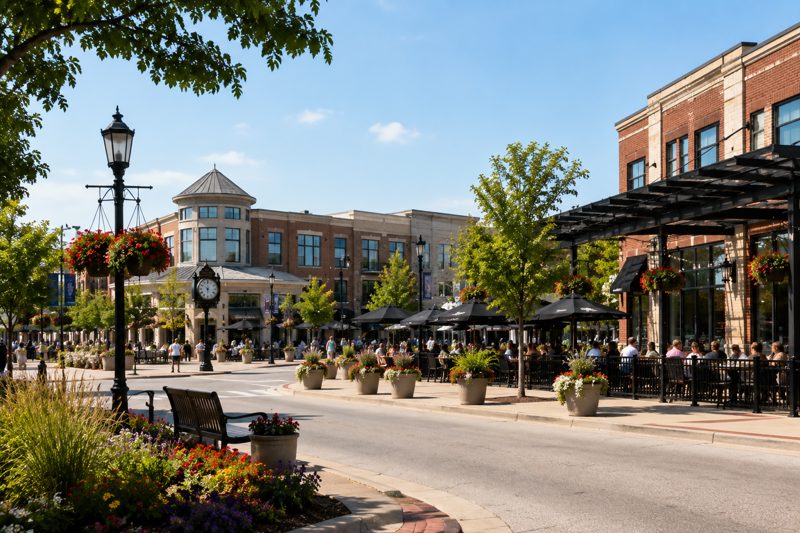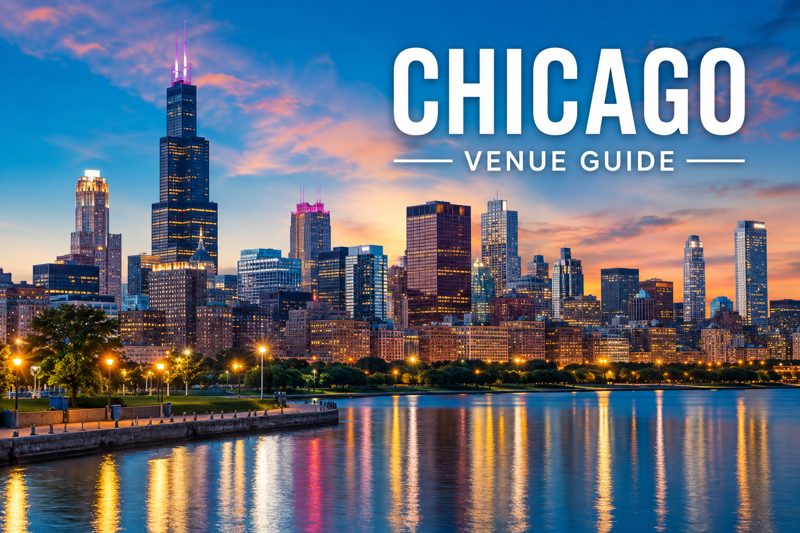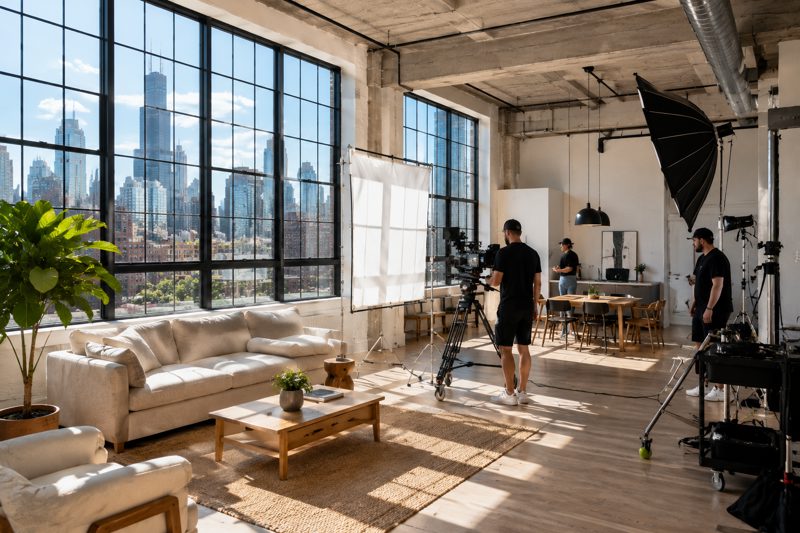
Chicago can give a production several visual worlds without sending the crew across an entire region. Clean daylight studios, brick lofts, polished restaurants, historic theaters, lakefront views, industrial interiors, rooftops, galleries, and residential spaces can all exist within the same city search. Start with Chicago photo shoot locations when the project is still driven mainly by the look, or browse Chicago film, video, and audio production spaces when sound, crew logistics, power, holding, and a longer production day matter just as much as the background.
The most photogenic room is not always the easiest place to shoot. A production can lose hours to a small elevator, difficult parking, loud HVAC, limited power, or nowhere to stage cases and wardrobe. The useful search starts with the creative brief, then tests the space against the real working day. Chicago has enough variety that crews usually do not need to choose between character and practicality, but they do need to know which details matter before the first truck or rolling case arrives.
Studios give the crew control when the shot cannot depend on luck
When light, sound, camera position, or repeatability matters, start with Chicago studios and sets. A controlled studio can eliminate many of the variables that make location work slower: changing daylight, street noise, furniture that cannot move, public traffic, and limited places to hide equipment. White cyc walls, blackout capability, grip access, high ceilings, open floor area, and dedicated power can be more valuable than a dramatic view when the production needs consistency from setup through the final take.
For still work, compare Chicago studios for photo shoots, especially when the day includes multiple looks, product work, fashion, portraiture, or a team that needs hair, makeup, wardrobe, and tethering space nearby. For motion work, explore Chicago studios for film, video, and audio production. Ask about sound isolation, ceiling height, power, freight access, load-in distance, parking, climate control, and whether the studio has a separate holding or client area. A studio is at its best when the crew can work without constantly rearranging around the building.
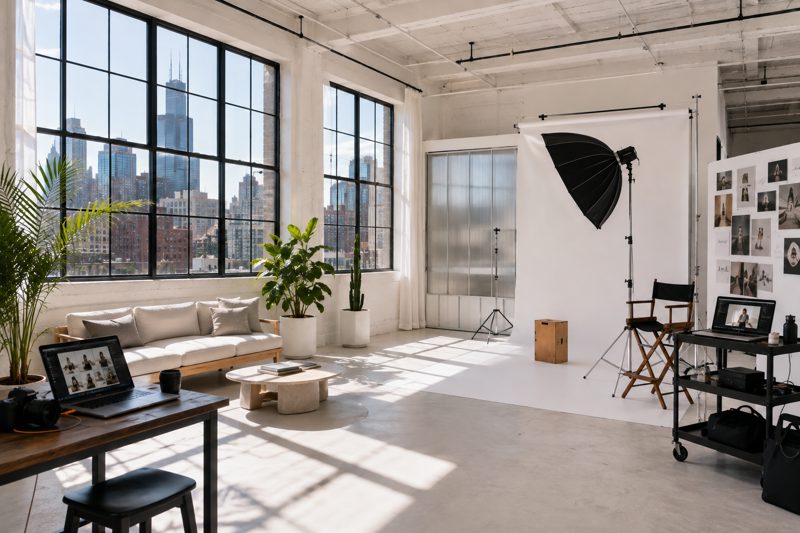
Event centers can be surprisingly useful for larger shoots
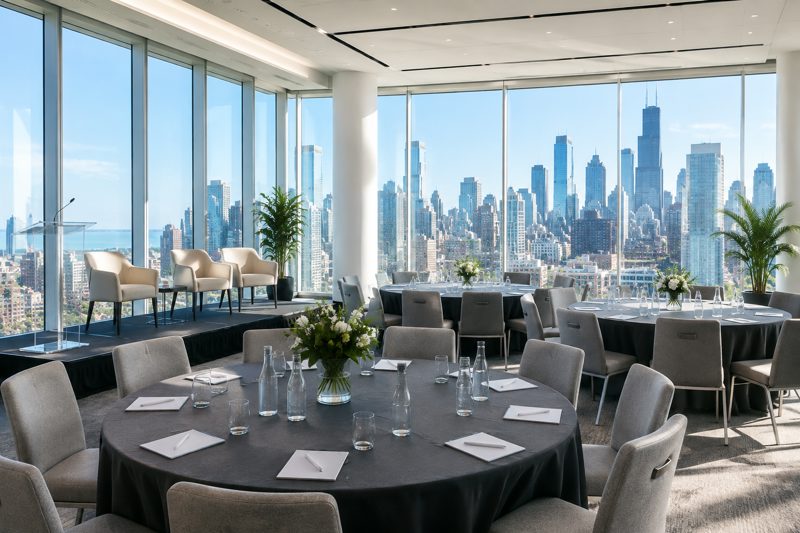
Production crews often overlook venues designed for events, but a large flexible room can solve practical problems quickly. Browse Chicago event centers when the project needs open floor area, multiple setups, room for talent and crew, easy furniture movement, or enough space to separate shooting from staging. These venues may already have loading access, restrooms, green-room-like side spaces, commercial power, and a staff accustomed to larger groups moving through the property.
For camera work, compare Chicago event centers suited to photo shoots. For a longer production day, look through Chicago event centers for film and video production. The tradeoff is visual specificity: an event hall may need more art direction than a restaurant, theater, or historic room. But when the brief calls for several looks, a built set, a large product, group photography, or significant equipment, the operational freedom can outweigh the need to dress the background.
Restaurants give productions a finished world without building one
A good restaurant location arrives with layers already in place: bar shelves, booths, table lines, kitchen details, lighting fixtures, glassware, architectural finishes, and the visual rhythm of a real hospitality space. Explore Chicago restaurants and bars when the brief needs a date-night scene, cocktail setting, dining sequence, hospitality campaign, chef content, lifestyle photography, or a polished social environment that would be expensive to recreate from scratch.
The challenge is control. Ask when the venue is closed to the public, whether furniture can move, which practical lights can be switched independently, how reflective the windows are, and whether kitchen or refrigeration equipment creates continuous sound. A restaurant that looks perfect at 7 p.m. may be far easier to shoot at 8 a.m. before service. The best location is often the one that gives the art department enough visual texture while still giving the crew time and space to work.
Galleries and museums can provide clean lines, scale, and architectural character
For fashion, editorial, product, interview, and branded content, browse Chicago museums and gallery spaces when the project benefits from strong architecture, white walls, sculptural rooms, or a more curated visual environment. These spaces can give a production polish without the hospitality cues of a restaurant or hotel, and they often photograph well with minimal dressing.
Restrictions matter more here. Artwork may be protected, walls may not be touched, stands may need floor protection, and certain rooms may have firm limits on crew size, lighting equipment, food, or movement. Ask what can be moved, where cases can be staged, whether flash or high-output lighting is permitted, and whether the booking includes access before or after public hours. A visually simple gallery can be a very controlled location once the rules are clear.
Theaters offer depth, texture, and built-in production value
Chicago's performance history gives crews another useful lane. Look through Chicago theater spaces when the shot needs a stage, rows of seats, curtains, backstage corridors, dressing rooms, dramatic architecture, or a venue that already feels cinematic. Theaters can support music content, interviews, performance footage, fashion, narrative scenes, promotional photography, and branded work that benefits from a strong sense of scale.
Before booking, ask whether the stage lighting system is included, who is allowed to operate it, how power is distributed, where the loading door is, and whether backstage areas are part of the rental. Old theaters can be visually rich but acoustically complicated; newer spaces may be easier technically but less distinctive. Walk the entire route from load-in to stage before deciding that the room itself is enough.
Homes and residential spaces can make a scene feel believable immediately
A residential location does something a set sometimes struggles to reproduce: it looks lived in. Browse Chicago mansions and homes when the brief calls for kitchens, bedrooms, staircases, living rooms, yards, driveways, or a more personal environment. Even a highly designed home can feel more believable on camera because the architecture, furniture, windows, and circulation were built for real daily use rather than assembled for one frame.
Residential shoots need a different kind of discipline. Protect floors, understand which furniture can move, keep crew areas separate from the shooting area, and ask about neighborhood parking and exterior noise. Camera movement can also be limited by doorways and room proportions. A home with a beautiful kitchen may not work if the island leaves nowhere for the camera, while a simpler room with wider circulation can give the director far more options.
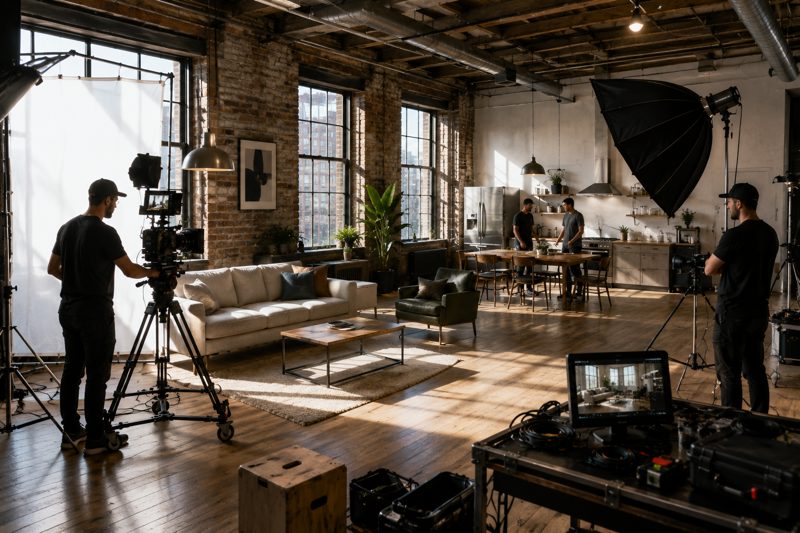
Rooftops and waterfront spaces are strongest when Chicago needs to read on camera
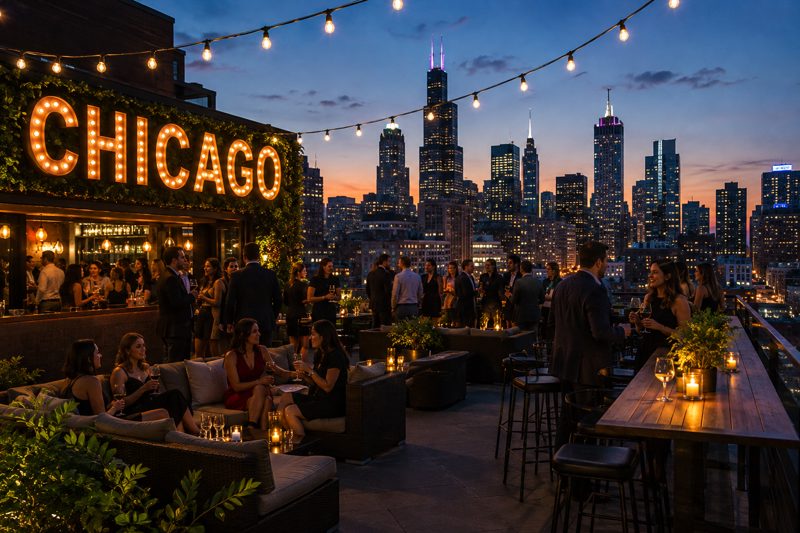
If the city itself is part of the creative brief, compare Chicago rooftop locations with Chicago waterfront venues. Rooftops can put towers and sky into the frame with very little explanation. Waterfront spaces can add lake, river, bridges, shoreline, reflections, and a wider sense of place. Both are useful for fashion, tourism, lifestyle, interviews, establishing shots, and branded work that should clearly feel connected to Chicago.
Exterior production always adds variables. Wind affects hair, wardrobe, audio, diffusion, and light stands. Bright sun can create large exposure differences between faces and skyline. Nearby construction, traffic, boats, aircraft, and sirens can complicate recorded dialogue. Ask where the sun moves across the location, whether there is indoor holding, how far the equipment travels from the elevator or loading area, and what happens if weather changes during the booked window.
Outdoor locations can trade control for scale and atmosphere
Gardens, courtyards, terraces, and open-air properties can give a shoot depth that is difficult to create indoors. Explore Chicago outdoor venues when landscaping, architecture, open sky, or natural movement through a space is part of the concept. These settings can work for lifestyle campaigns, family scenes, wellness content, fashion, food photography, and productions that need a softer counterpoint to Chicago's harder urban architecture.
Scout the location at approximately the same hour the camera will roll. A courtyard that looks evenly lit in the morning may be split by hard building shadows in the afternoon. Check access to power, restrooms, indoor holding, shade, and a weather alternative. For still photography, a passing cloud may be manageable. For motion work that must cut between takes, changing sun can become a continuity problem very quickly.
Entertainment venues can solve a brief that needs something already happening
Some productions need more than an attractive room; they need an environment with an activity built into it. Browse Chicago entertainment venues when the concept calls for games, performance, nightlife, interactive spaces, or a setting with immediate energy. The existing equipment, lighting, architecture, and activity can provide production value that would take significant time to build elsewhere.
The scout should separate what is visually available from what is operationally available. Ask whether games or attractions can run during filming, whether house lighting can be controlled, whether music systems can be shut off, and how much of the venue can be made private. A great visual may still be difficult to record if the building depends on constant sound, moving customers, or equipment that cannot be stopped.
Load-in and parking can matter more than the first photograph
Location photos rarely show the route between the street and the room. Before booking, find out where the production vehicle stops, whether there is a loading zone, how many stairs or elevators are involved, the size of the freight elevator, and where cases can live once the equipment is inside. A two-minute walk with a laptop is very different from the same route with carts, stands, wardrobe racks, cases, and a full camera package.
Use the broader Chicago venue search when several types of spaces could satisfy the brief. Sometimes a less obvious category wins because it solves access, parking, holding, sound, or schedule more cleanly. A production day is a chain of small movements, and the best location keeps those movements short and predictable.
Scout for the entire working day, not only the hero angle
Before committing, photograph the room from every camera direction. Listen with the HVAC running. Check windows at the scheduled hour. Open the loading door. Walk to the restrooms. Find a place for wardrobe, makeup, clients, meals, and empty cases. Confirm what furniture can move and who has to move it. Ask where the circuit panel is, whether generators are allowed, and exactly when the crew can enter and must be out.
Chicago gives producers enough variety that the creative idea does not have to be separated from practical production needs. Studios provide control. Restaurants arrive dressed. Event centers give crews room to spread out. Galleries and theaters provide architecture. Homes create believability. Rooftops, waterfront spaces, and outdoor venues put the city into the frame. The right location is the one that looks right at call time and still works twelve hours later when everyone is trying to make the final shot.