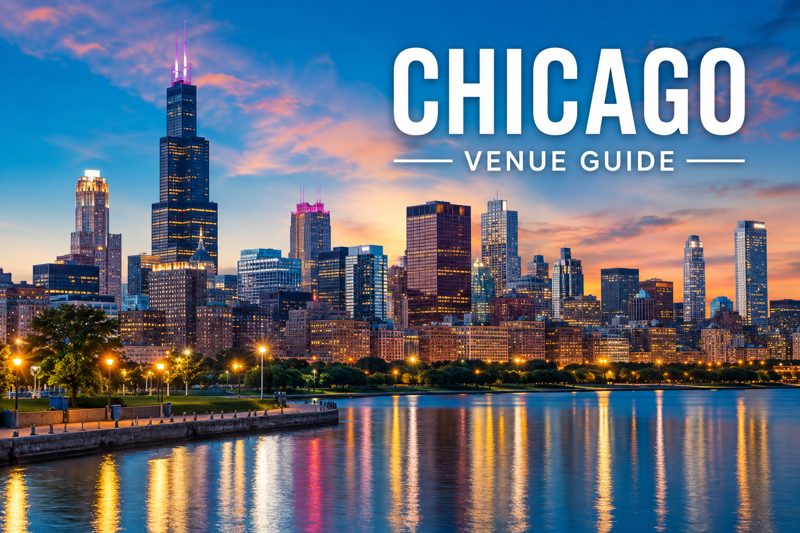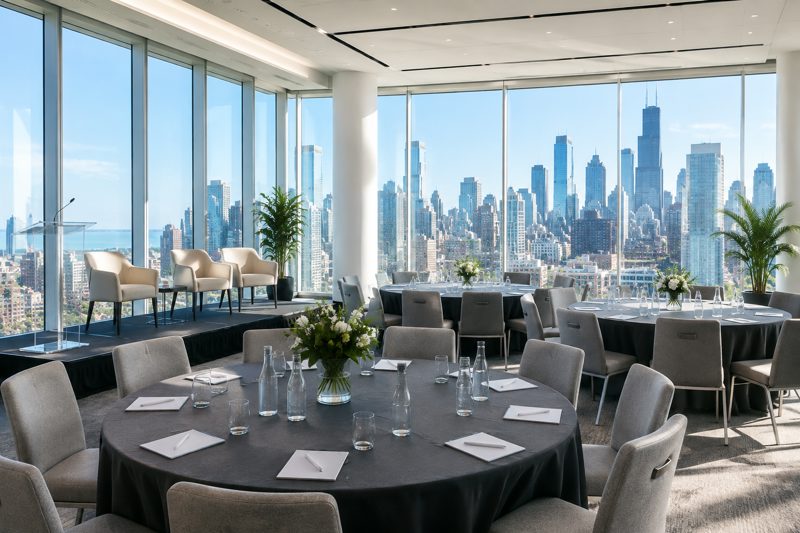
Chicago is a strong corporate-event city because the venue market can support very different kinds of work without making every gathering feel like a conference. A client dinner in the West Loop, a networking reception downtown, an executive offsite in a private room, a company celebration on a rooftop, and a presentation inside a flexible event hall all need different things from the space. Start with the broader Chicago corporate and networking venue search, then narrow by agenda, guest count, food service, presentation needs, travel patterns, and how formal the event should feel.
The best corporate venue is rarely the one with the longest amenity list. It is the one that removes friction. Guests should know where to enter. Presenters should not be fighting the room acoustics. Food and drinks should arrive without interrupting the program. People traveling from out of town should be able to get there without turning the event into a transportation problem. Chicago gives planners plenty of choices, but the useful comparison is always between the experience on the schedule and the way the space actually functions.
Restaurants and bars are hard to beat for client dinners and networking
When the main goal is conversation, hospitality can matter more than square footage. Browse Chicago restaurants and bars for private events when food, drinks, staffing, furniture, and atmosphere should already be part of the package. These spaces work especially well for client dinners, team celebrations, recruiting events, holiday gatherings, investor dinners, and networking receptions where the room should feel polished without requiring a full event build.
For a more focused search, compare Chicago restaurant and bar spaces for corporate events. Ask whether the room is fully private, how the bar service works, whether there is a presentation screen or microphone option, and how much flexibility exists around seating. A restaurant may be effortless for a 40-person dinner and awkward for a 90-person program with speeches, branding, check-in, and AV. The right answer depends on whether the event is primarily about eating, talking, presenting, or moving between all three.
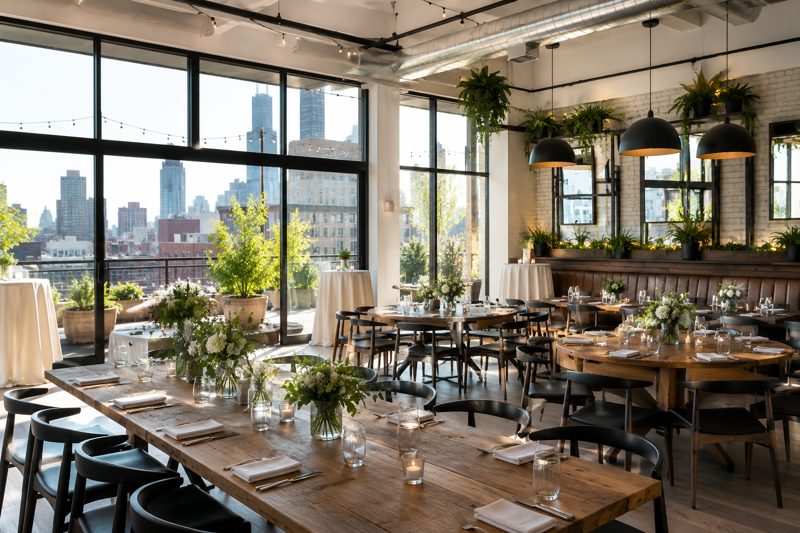
Hotels simplify travel-heavy events and multi-part schedules
Hotels become especially useful when the guest list includes travelers, senior leadership, or several events spread across one or two days. Explore Chicago hotel event spaces when guest rooms, catering, meeting rooms, elevators, security, and a central arrival point all matter. For conferences, executive meetings, company retreats, and customer events, having the program and lodging under one roof can remove a surprising amount of logistical noise.
When the event is specifically corporate, narrow the field with Chicago hotels for corporate and networking events. Ask about room blocks, minimum food and beverage spend, breakout rooms, loading, preferred vendors, AV packages, and how late guests can continue after the formal program ends. If the schedule includes workshops or internal sessions, it can also be useful to compare Chicago hotels for meetings and team events. Hotels can cost more than a standalone room, but they often make a complicated day easier to manage.
Event centers are useful when the program needs more than one mode
A corporate event may begin with check-in, move into a presentation, shift to food and drinks, and finish with networking or entertainment. That is where Chicago event centers can earn their keep. They tend to offer more open floor area and more freedom to change the room than a restaurant or conventional meeting room. They can work well for launches, awards events, fundraisers, recruiting programs, company celebrations, trade gatherings, and larger networking events.
For the deeper corporate layer, browse Chicago event centers for corporate events. Confirm what is included before comparing prices: tables, chairs, staging, sound, screens, microphones, lighting, security, coat check, setup time, and cleanup can change the real cost quickly. The strongest event center is not simply the largest room. It is the one that lets the program change pace without making guests feel as though they are being constantly rearranged.
Meeting spaces work when the work itself is the point
Some events do not need a dramatic backdrop. They need a room where people can hear each other, see the screen, get online, take calls, and stay focused for several hours. Start with Chicago meeting spaces when the agenda includes strategy sessions, training, workshops, board meetings, interviews, classes, or team planning. Sightlines, acoustics, Wi-Fi, power, climate control, writable surfaces, and breakout areas matter more here than decorative flexibility.
For a broader use-case search that includes spaces outside the traditional meeting-room category, compare Chicago spaces for meetings, classes, and team events. A loft, hotel room, restaurant private room, or event venue may work better than a conference room if the day needs a meal, social time, or a more relaxed tone. The best offsite still has to function as a workplace while people are in it.
Ballrooms make sense when the company event needs scale and structure
Large awards dinners, annual celebrations, formal fundraisers, association events, and company galas often need a room that can handle seated guests, a stage, speeches, service, and entertainment without feeling improvised. Compare Chicago ballrooms when the guest count is substantial and the night has a clear program. These spaces are designed around circulation and service, which can be valuable when several hundred people need to move through arrival, dinner, presentations, and dancing.
For corporate-specific options, explore Chicago ballrooms for corporate events. Ask whether the stated capacity includes a stage, dance floor, AV control, bars, and service aisles. Also confirm the foyer or pre-function area, because registration and cocktail time often need space of their own. A ballroom can feel traditional, but thoughtful lighting, production, furniture, and programming can make it feel current without fighting the room.
Entertainment venues can give company events a reason to loosen up
Not every corporate gathering benefits from another room full of cocktail tables. For team celebrations, client entertainment, recruiting events, holiday parties, and company milestones, Chicago entertainment venues can build an activity into the event. The attraction may be live performance, games, music, immersive entertainment, or simply a venue with more energy than a conventional meeting room.
When the goal is specifically business-oriented, compare Chicago entertainment venues for corporate and networking events. Ask whether your group has a private area, whether the activity is exclusive, where food and drinks are served, and whether there is a quieter place for conversation. Entertainment can make an event memorable, but the room still needs to support the business reason people were invited.
Rooftops work when the city itself should be part of the impression
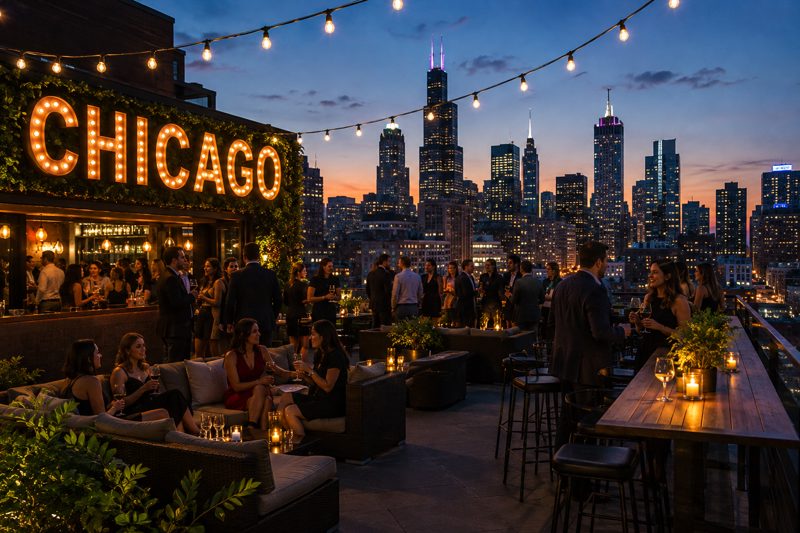
Chicago rooftops can turn a standard reception into something that feels distinctly tied to the city. Look through Chicago rooftop venues for client receptions, networking nights, company celebrations, product gatherings, and summer events where the skyline adds value without requiring much extra decor. They can work especially well after a daytime meeting or conference, when the goal shifts from agenda to conversation.
For corporate gatherings specifically, browse Chicago rooftop spaces for corporate events. Confirm indoor backup, elevator capacity, sound rules, weather policies, bar service, and the actual number of guests who fit comfortably with furniture in place. A rooftop is a strong choice when the view supports the event, not when the entire plan depends on perfect weather.
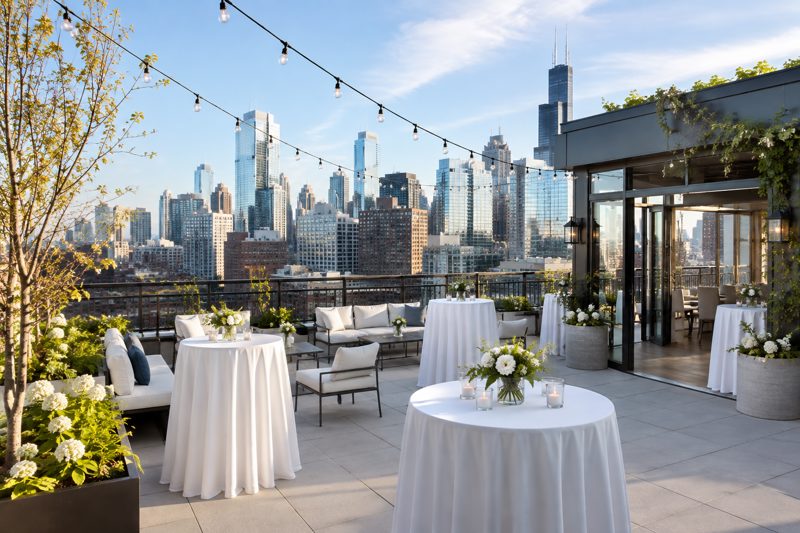
Outdoor venues can work well for daytime and less formal company events
For summer team gatherings, wellness events, daytime receptions, employee appreciation events, and casual networking, browse Chicago outdoor venues. Gardens, patios, terraces, and courtyard spaces can make the day feel less corporate without making it disorganized. Outdoor settings are especially useful when the program is light and guests should be able to move between conversations rather than remain seated for hours.
For company-focused options, compare Chicago outdoor venues for corporate events. Ask about shade, rain backup, power, lighting, restrooms, amplified sound, food service, and how the space changes after sunset. Chicago weather can turn quickly, so the backup plan should feel like a real second venue rather than a technical answer to a contract question.
Studios and flexible creative spaces can help brands avoid the conference look
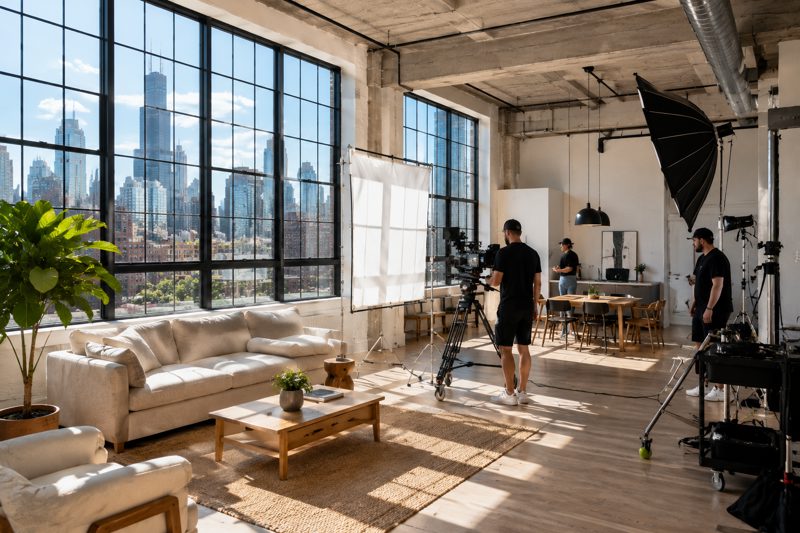
Some corporate events need a cleaner, more adaptable environment for branding, product displays, content capture, or a presentation that should feel less conventional. Explore Chicago studios and sets when open floor area, lighting control, equipment access, or visual flexibility matters. A studio can work well for launches, media days, branded events, recruiting content, demonstrations, and smaller company gatherings where the room itself needs to transform.
For business events in that category, compare Chicago studios for corporate and networking events. Confirm guest comfort as carefully as production capability. Restrooms, heating and cooling, seating, catering access, elevators, parking, and acoustic treatment can be just as important as ceiling height and power. A creative space should still feel hospitable once the cameras and equipment are out of the way.
Choose the neighborhood around the guest list and schedule
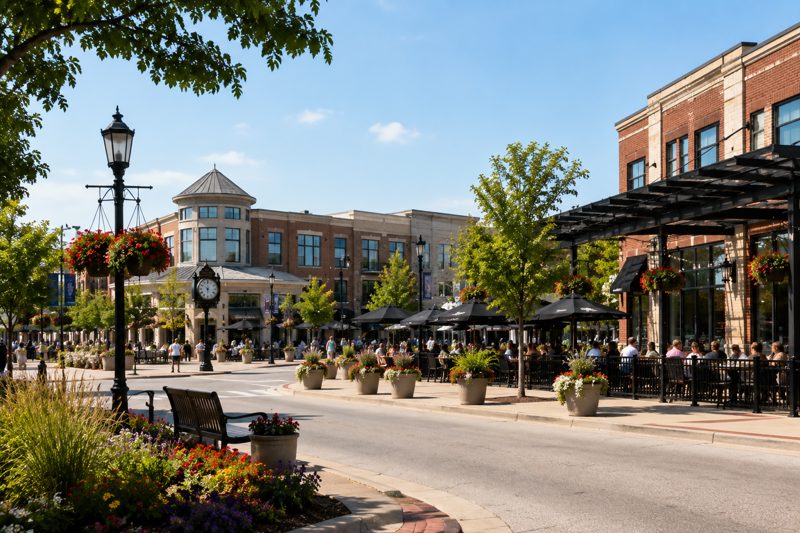
Chicago geography matters because a venue can be only a few miles away and still change the experience of the day. Downtown and River North can be convenient for hotels, offices, and visitors. West Loop can work well when restaurants and nightlife are part of the plan. Other neighborhoods may offer easier parking, different architecture, or a less formal environment. Before booking, compare the venue with where guests are starting, when they will arrive, and what they are expected to do afterward.
The broader Chicago venue search is useful when the event format is still open. A corporate dinner, presentation, reception, workshop, and celebration do not need to live in the same category just because they share the same guest list. Start with the agenda, then let the neighborhood and venue style solve the practical problems around it.
A corporate venue should make the schedule feel easier
Before signing, walk through the event in order. Where does registration happen? Where do coats and bags go? Can the first speaker be heard from the back? Is there a place for private calls? When does food arrive? Can staff reset the room without interrupting guests? Where do vendors load in? What happens if a flight is late, the weather changes, or the presentation runs long? Those questions reveal whether the venue actually supports the day.
Chicago gives companies enough choice that the space can match the purpose instead of forcing the purpose into a generic room. Restaurants support conversation. Hotels simplify travel. Event centers create flexibility. Meeting spaces keep work moving. Ballrooms bring structure. Entertainment venues add energy. Rooftops and outdoor spaces make the city part of the experience. Studios create a more adaptable visual environment. Once the venue style fits the agenda, the rest of the planning becomes much easier to control.