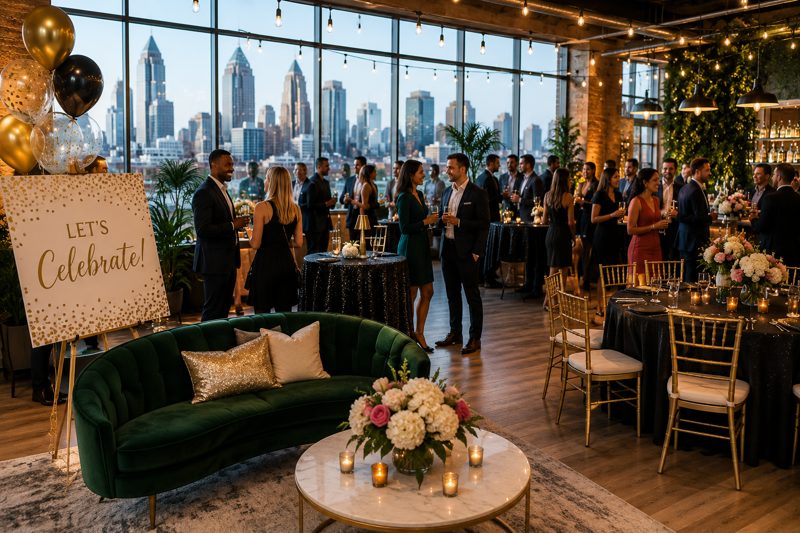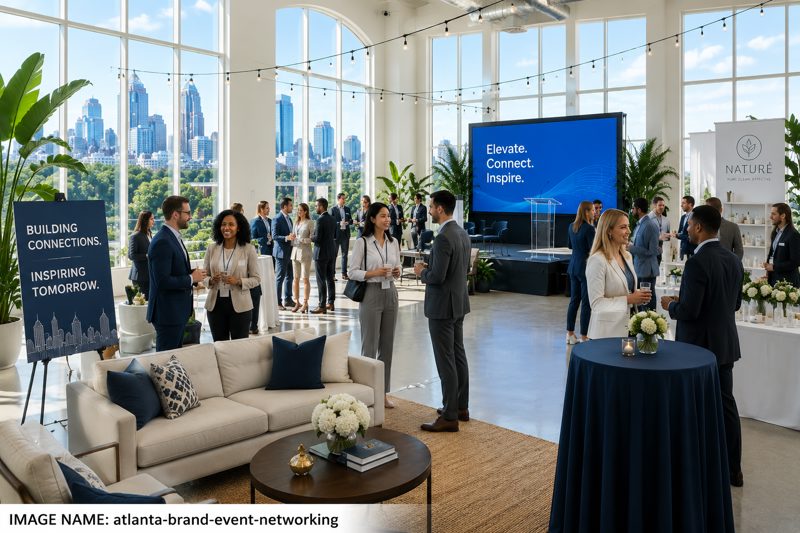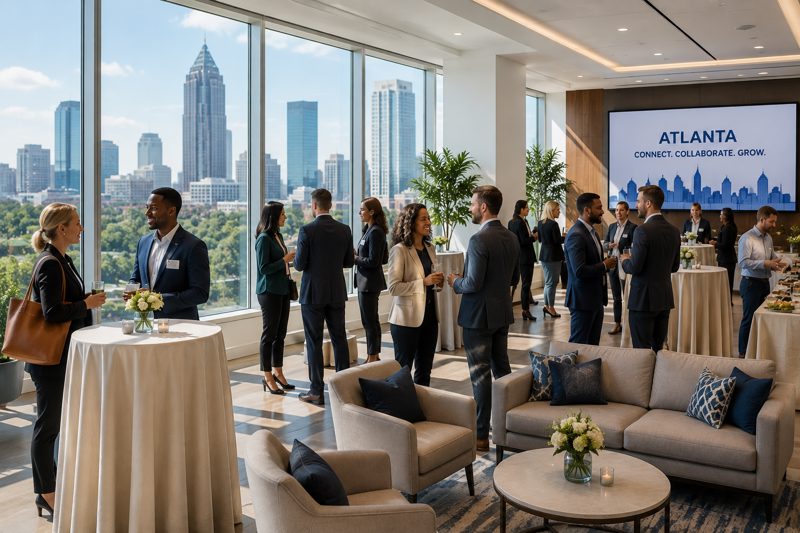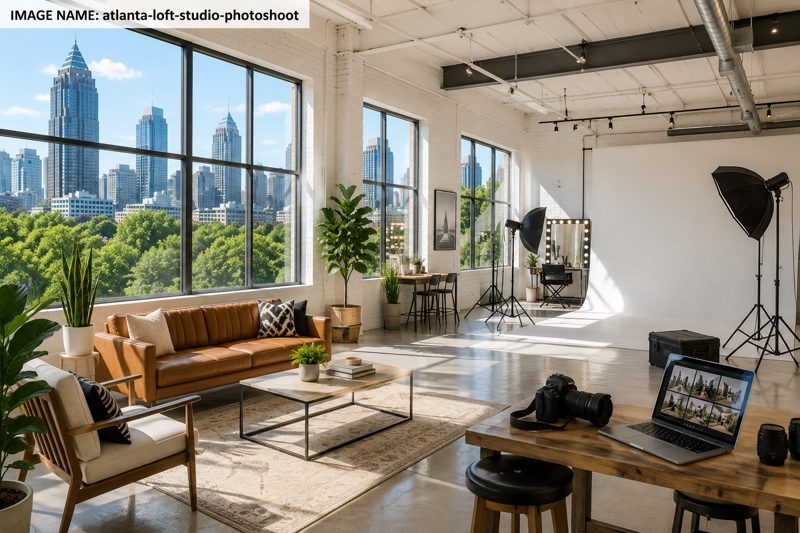
Atlanta gives photographers a wide range of looks without requiring every shoot to happen in a traditional studio. A polished restaurant can work for lifestyle images. A hotel can give a fashion or editorial team several distinct interiors in one location. An event center can provide open floor area for a larger commercial setup, while a garden, terrace or outdoor property can give the day a completely different feel.
The useful way to search is to begin with the images you need rather than the kind of venue you think you should book. Browsing photo shoot locations in Atlanta becomes much easier once you know whether the priority is controlled light, architectural character, multiple backgrounds, privacy, room for equipment or simply a setting that already looks finished on camera.
Choose the location for the pictures, not the label on the venue
A location does not have to call itself a photo studio to photograph well.
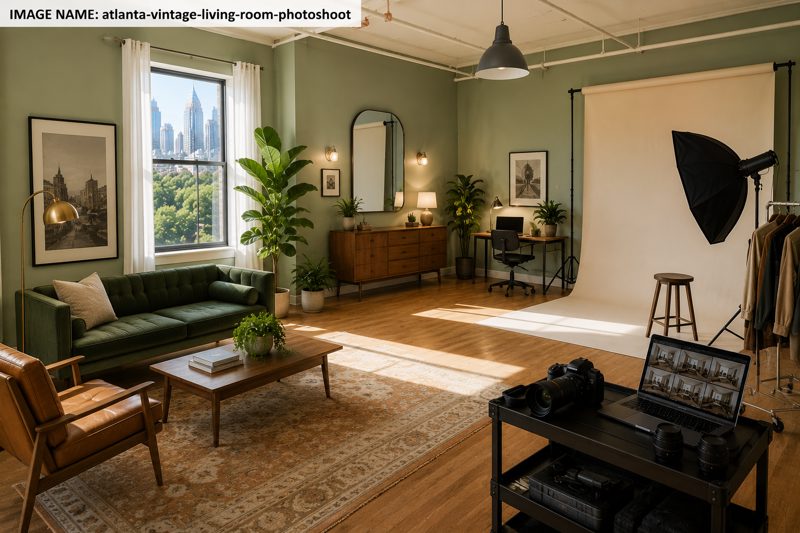
Restaurants, private dining rooms and bars can be useful when the shoot needs texture, built-in furniture and a believable lifestyle setting. Atlanta restaurants and bars for photo shoots can work for food campaigns, hospitality images, portraits, fashion, editorial work and branded content where an empty white room would create more work than it solves.
The advantage is that much of the art direction already exists. The disadvantage is that you have less control over it. Ask whether furniture can move, whether windows can be covered, when the kitchen is active and whether the location will be completely private during the shoot. A beautiful dining room is less useful if staff and customers have to move through the frame every few minutes.
Large productions need room behind the camera too
People naturally judge a location by what the camera sees, but the crew spends most of the day dealing with everything outside the frame.
For shoots with several talent, wardrobe, hair and makeup, lighting equipment or multiple setups, Atlanta event centers for photo shoots can be practical because they often provide more open space than a conventional room. That extra square footage can become a staging area, wardrobe station, equipment zone or holding space instead of forcing every case and clothing rack into the shooting area.
Before booking, ask where the crew enters, how close vehicles can get to the door, whether there is an elevator and where cases can stay once they are unloaded. A location that saves thirty minutes on every equipment move can be more valuable than one with a slightly prettier wall.
Outdoor locations give you scale that is difficult to fake
Natural light, landscaping, terraces, courtyards and open views can make a relatively simple shoot feel much larger.
Atlanta outdoor venues for photo shoots are worth considering for fashion, family campaigns, fitness, wellness, bridal, product and lifestyle work where the environment should be visible rather than disguised.
Outdoor shoots also introduce variables that do not exist in a controlled room. Visit at roughly the same time of day you expect to shoot if possible. A terrace that looks evenly lit at 10 a.m. may be in hard sun later in the afternoon. Check where the sun moves, where shade falls and whether there is an indoor place for wardrobe, equipment and people who are waiting.
Weather matters, but so do wind, sound and nearby activity. A still-photo crew may be able to work through background noise that would stop a video production, while a beauty or fashion shoot may care far more about wind than sound.
A real studio earns its value through control
When consistency matters more than a recognizable environment, a purpose-built studio is often the simplest choice.
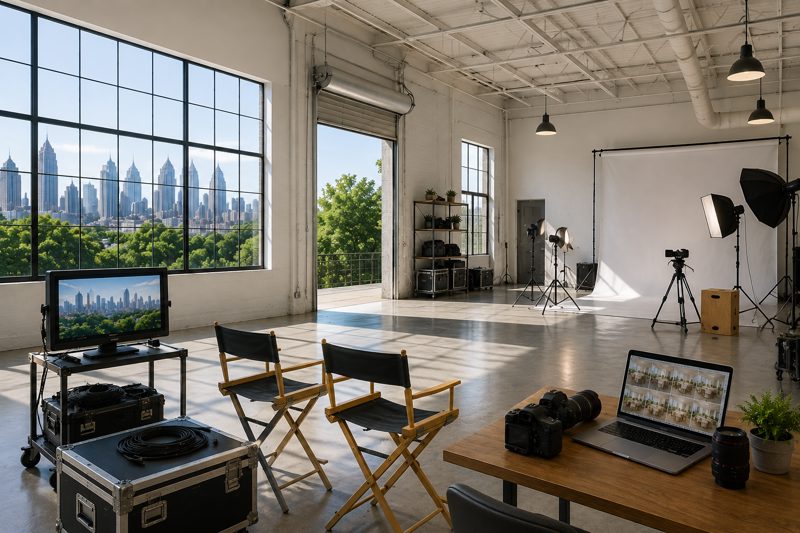
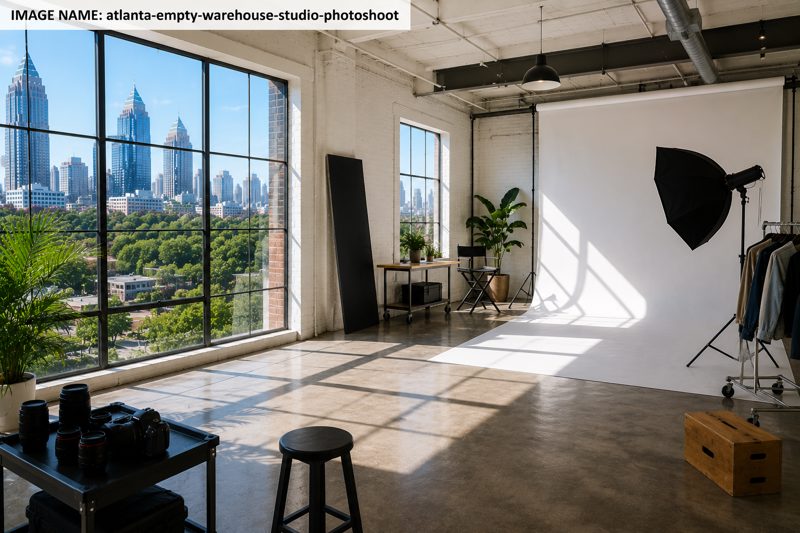
Atlanta studios and sets for photo shoots can give photographers control over light, power, backgrounds and the pace of the day. Some provide cyc walls, prebuilt sets or grip equipment. Others are essentially clean open rooms that let the creative team build exactly what it needs.
That control is particularly useful for catalog work, headshots, products, beauty, fashion and campaigns where dozens of images have to share the same visual language.
Look closely at ceiling height, available power, window orientation, freight access and what equipment is actually included. "Studio" can describe everything from a compact daylight loft to a production facility capable of holding a large crew, so the category alone does not tell you whether the room fits the job.
Hotels can give one shoot several different looks
A hotel is useful when the shot list needs variety without repeated company moves.
Depending on access, Atlanta hotels for photo shoots may offer guest rooms, suites, lounges, restaurants, corridors, terraces and larger public spaces within the same property. That can make sense for travel, fashion, hospitality and lifestyle campaigns where the team needs a sequence of related environments.
Permission is the important part. Do not assume that booking a room automatically gives a commercial crew the right to photograph throughout the property. Confirm exactly which areas are included, whether equipment can pass through public spaces, where the crew can stage and whether there are restrictions on tripods, lighting or recognizable guests.
Entertainment spaces can create images that do not look staged
Sometimes the strongest location is one where something visually interesting is already happening.
Atlanta entertainment venues for photo shoots can work for campaigns that need energy, color, activity or a setting that immediately communicates what people are doing. The location can contribute props, lighting and visual structure that would otherwise have to be fabricated.
This works best when the existing environment actually supports the concept. A location with a lot of personality can overpower a product just as easily as it can improve an image. Decide whether the venue is supposed to be the subject, a recognizable background or simply a source of texture before choosing the busiest option.
Art spaces can give editorial work a cleaner backdrop
For portraits, fashion, cultural campaigns and editorial work, a quieter environment can sometimes be more useful than a heavily decorated room.
Atlanta museums and galleries for photo shoots can offer strong architecture, clean walls, interesting scale and artwork that changes the visual character of the location without filling it with furniture.
These spaces also tend to require more careful coordination. Ask what may appear in the finished images, whether artwork has reproduction restrictions, where lighting stands can be placed and whether any areas are off limits. If the creative concept depends on a particular piece or installation, get that permission settled before the rest of the shoot is built around it.
Theaters offer depth, drama and built-in lighting positions
A stage gives a photographer something most ordinary rooms cannot: distance.
Atlanta theaters for photo shoots can work for portraits, performance imagery, fashion, album artwork and campaigns that benefit from a stage, rows of seats, curtains or a more dramatic sense of scale.
They can also provide useful technical infrastructure, but access varies widely. Ask whether house lighting can be used, whether the stage is available exclusively, what areas of the auditorium are included and whether the crew can use backstage rooms for wardrobe and makeup.
A theater is often most interesting when the photographer uses more than the obvious center-stage angle. Aisles, balconies, backstage corridors, curtains and empty seating can each create a very different frame without leaving the building.
Ballrooms can be surprisingly versatile when they are empty
A ballroom seen during a wedding or gala can look extremely specific. Empty, it may be a completely different space.
Atlanta ballrooms for photo shoots can provide large uninterrupted floors, tall ceilings, chandeliers, neutral walls and enough distance for longer lenses or larger lighting setups. They can suit fashion, formal portraits, commercial campaigns and staged scenes where the production needs scale without moving outdoors.
Ask what furniture will remain in the room and whether décor can be moved. Also check exactly how much setup time is included. A large room gives a crew more possibilities, but those possibilities take time to light and shape.
Scout for the problems the finished photograph will never show
The best location scout is partly creative and partly practical.
Take reference photos from the angles you are likely to use. Then turn around and look at everything the camera will not see. Where will wardrobe go? Where can hair and makeup work? Are there enough outlets? Can a model change privately? Is there a clean restroom nearby? Where will twenty equipment cases live? Can a delivery vehicle stop close to the entrance?
Listen as well as look. Even on a still shoot, a noisy or crowded location can make communication harder and slow the day down.
Atlanta has enough variety that photographers can choose a location for the actual visual idea rather than settling for a generic room and trying to disguise it. The most useful space is the one that gives the camera what it needs while making everything happening behind the camera easier to manage.