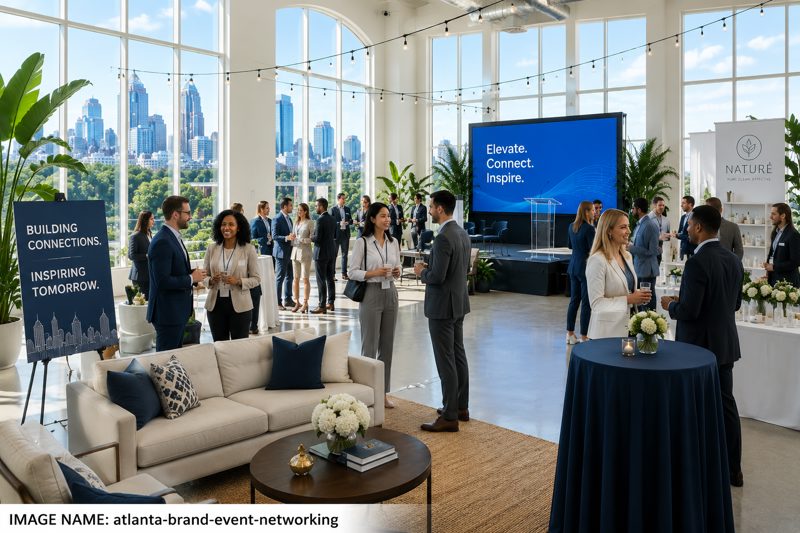
A brand launch, charity fundraiser and public-facing event may all involve a crowd, food and a microphone, but they are not really the same kind of event.
A fundraiser has to make people care enough to stay engaged and, ideally, give. A brand event may need to create an impression within the first few minutes. A public event has another challenge entirely: people may arrive at different times, know very little about what is happening and need to understand the space almost immediately.
That makes the venue more than a backdrop. It affects how people enter, where their attention goes, how easily they move around and whether the event feels organized once the room fills up. Looking through Atlanta venues for brand, fundraising and public events is a good starting point, but the useful question is what the space needs to accomplish after people walk through the door.
Start with the purpose before thinking about the room
It is easy to get distracted by a beautiful venue and start inventing an event around it.
That usually works backward.
A nonprofit dinner built around a live appeal needs good sight lines and a room that can become quiet when someone takes the microphone. A consumer brand may care much more about where guests encounter the product, how the room photographs and whether there is space for an installation. A community event may need simple circulation, easy entry and enough flexibility to handle people coming and going throughout the day.
Write down what absolutely has to happen during the event before you compare spaces. Once those needs are clear, a lot of otherwise attractive venues will eliminate themselves.
Hotels can simplify events with sponsors, speakers and travelers
Hotels are particularly useful when an event involves people coming from outside Atlanta.
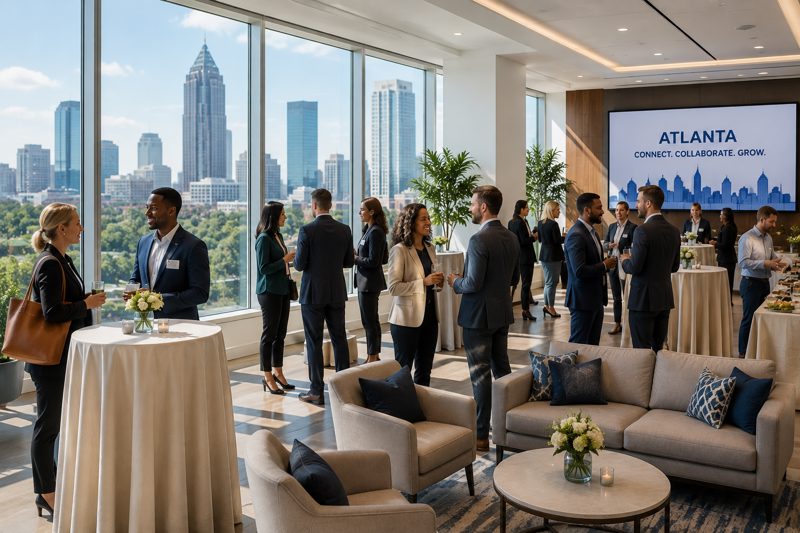
For conferences, nonprofit galas, donor weekends, association gatherings and larger branded events, Atlanta hotels for brand and fundraising events can put guest rooms, catering, meeting rooms and the main event under one roof. That matters when the schedule includes a reception Friday night, meetings Saturday afternoon and a dinner Saturday evening.
Hotels also tend to understand complicated timelines. They are accustomed to deliveries, room changes, registration tables and groups arriving in waves.
The downside is that flexibility can come with layers of pricing. Before comparing one hotel with another, ask for the total picture: room rental, food and beverage minimums, service charges, AV, parking, security and any required vendors. A space that looks reasonably priced at first can change considerably once the full event is added.
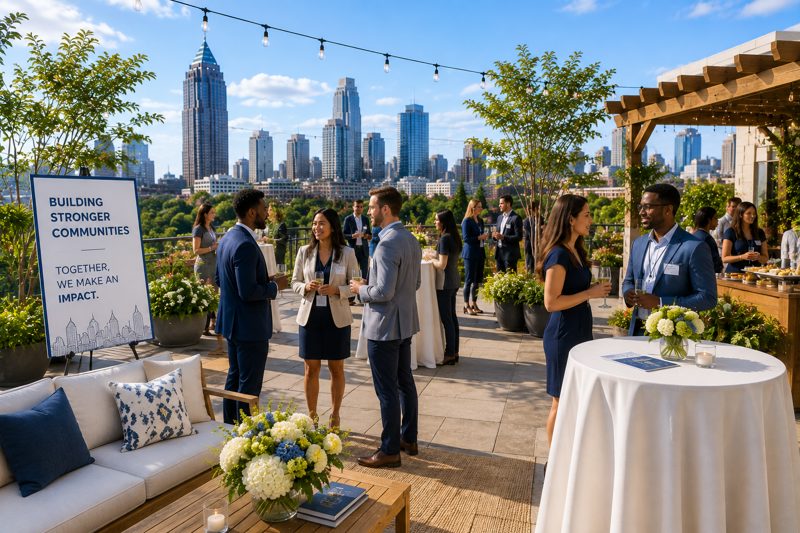
Event centers work well when the room has to change during the night
Some events need a venue that can do several jobs.
Guests might enter through a registration area, move into a reception, sit for a program, eat dinner and then return to a more social layout afterward. Atlanta event centers for brand and public events are often well suited to that kind of progression because the rooms are generally designed to be rearranged.
That flexibility is useful for product launches, awards programs, larger fundraisers, community events and branded experiences where furniture, staging or décor needs to be brought in.
Ask how early you can get access. A space that allows vendors in at 8 a.m. is very different from one that gives you two hours before the doors open. If the event depends on substantial setup, access time can matter almost as much as the rental price.
Restaurants and bars are strong when the event is about relationships
Not every fundraiser needs a ballroom, and not every brand event needs a stage.
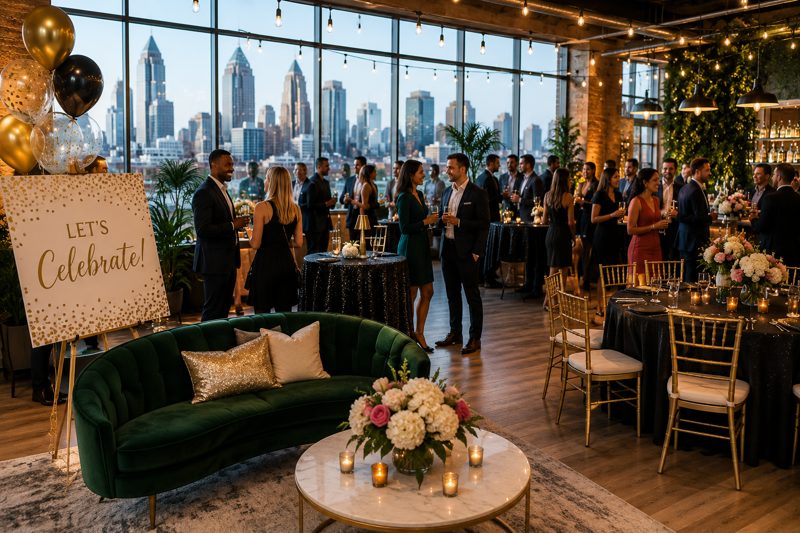
For donor dinners, press gatherings, networking events, launch parties and smaller sponsor events, Atlanta restaurants and bars for fundraising and brand events can create a warmer atmosphere from the beginning. Guests arrive somewhere that already feels alive instead of entering an empty room that had to be built into an experience that morning.
Food service is also far simpler when the kitchen is already twenty feet away.
The important question is privacy. Find out whether you are renting the whole venue, a private room or an area separated from regular customers. If there will be remarks, presentations or confidential conversations, background noise that seemed charming during a tour can become frustrating once the program begins.
Smaller events may benefit from a simpler space
There is a tendency to make anything involving a company or organization feel bigger than it needs to be.
A press preview for thirty people does not necessarily need a large event hall. Neither does a board reception, training day, small donor presentation or invitation-only product demonstration.
In those situations, Atlanta meeting spaces for brand and public events can be a practical alternative. They are often easier to configure for presentations, screens, discussion and smaller groups, without paying for hundreds of square feet nobody will use.
They can also make an event feel more intentional. Forty guests in the right-size room create energy. The same forty guests scattered around a venue built for 300 can make the event seem poorly attended even when everyone who was invited showed up.
Outdoor events can feel more open and accessible
Atlanta gives planners plenty of opportunities to move an event outside, especially when the gathering is meant to feel approachable rather than formal.
Atlanta outdoor venues for fundraising and public events can work well for community programs, daytime fundraisers, nonprofit gatherings, brand activations and events where guests are expected to move around rather than sit through a long program.
An outdoor setting can also make a public-facing event easier to discover and explore. People naturally spread out, different activities can occupy different areas and the environment itself creates much of the atmosphere.
Weather is the obvious risk, but it is not the only one. Ask about power, restrooms, lighting after sunset, amplified sound, parking and what vendors are allowed to bring onto the property. An outdoor venue needs infrastructure just as much as an indoor one. It is simply easier to forget about it during a sunny site visit.
Studios give brands room to build something from scratch
Some events are less about decorating a venue and more about temporarily transforming it.
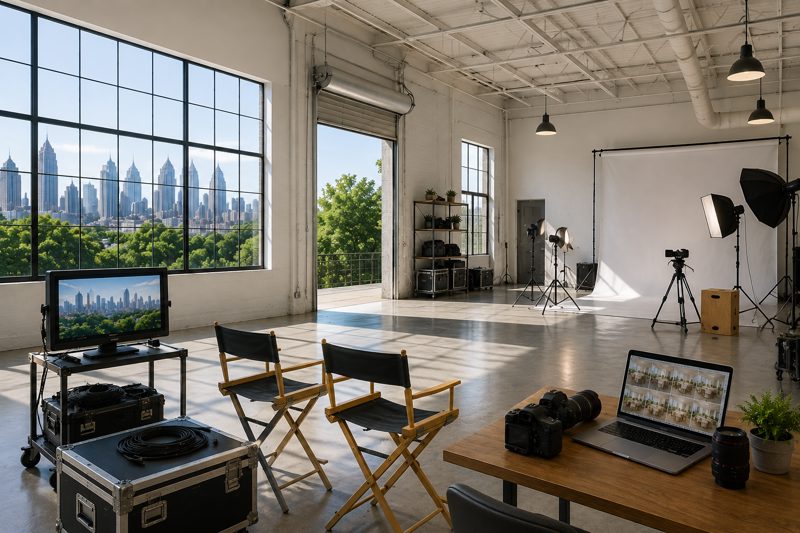
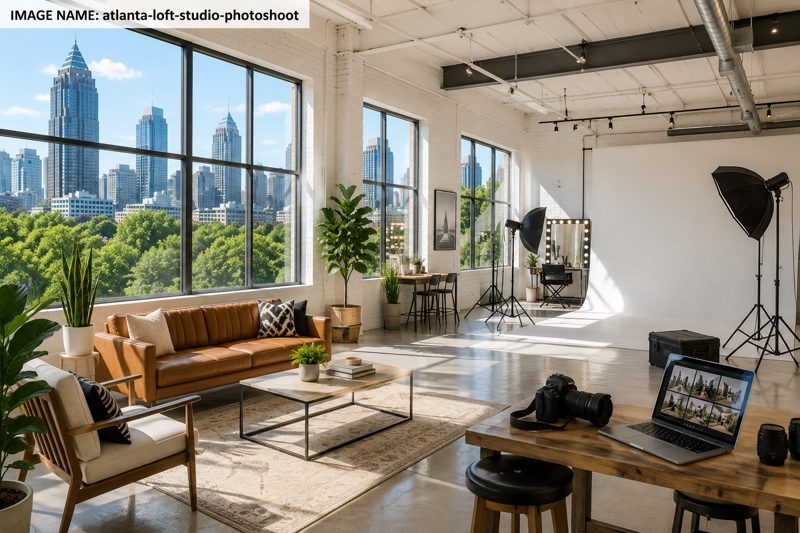
That is where Atlanta studios and sets for brand events become interesting. A relatively blank space can accommodate product displays, custom lighting, branded walls, demonstration areas, video production or an installation that would look out of place inside a hotel ballroom.
Studios also make sense when content creation is part of the event itself. A company may want photography, interviews, livestreaming or video captured throughout the day.
The tradeoff is that production flexibility does not automatically equal guest comfort. Check seating, climate control, restrooms, food-service areas and accessibility. A studio that works beautifully for a twelve-person crew may need much more preparation before it works for 150 invited guests.
Ballrooms still make sense when the program matters
There are events where everyone eventually needs to face the same direction.
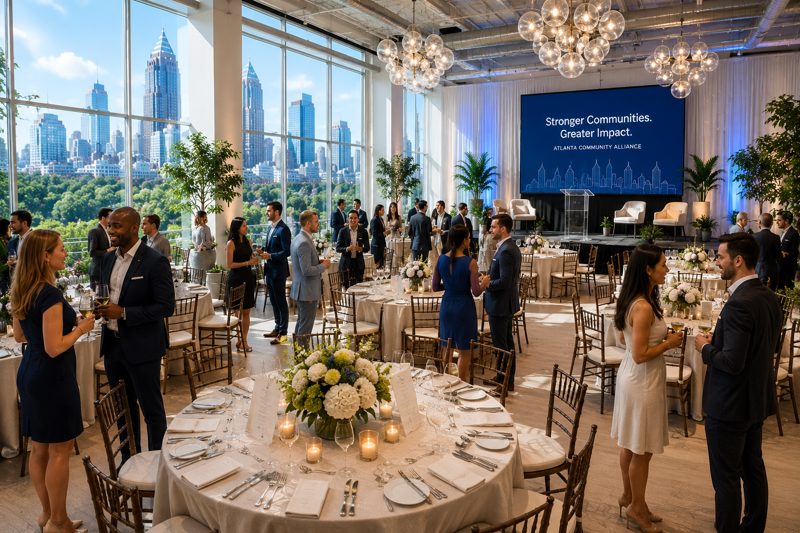
Galas, major fundraising dinners, award programs and large nonprofit events often benefit from Atlanta ballrooms for fundraising and public events because the room is already designed around seated guests, service, staging and a formal program.
That structure can be valuable when timing matters. Dinner can happen while a stage remains visible, speakers can address the entire room and the event can transition into entertainment or dancing afterward.
Capacity should still be treated carefully. Ask for the floor plan with your actual setup included. A stated maximum capacity may assume there is no large stage, auction display, dance floor, production booth or silent-auction area taking up space.
Entertainment venues can solve the hardest part of some events
Sometimes the problem is not finding a room. It is figuring out why people will want to spend three hours there.
Atlanta entertainment venues for brand and fundraising events can build part of the experience into the location itself. That can be useful for sponsor appreciation nights, less formal fundraisers, customer events and brand gatherings where interaction matters more than a long seated program.
An activity also gives people who do not know one another something to talk about.
Just make sure the entertainment supports the purpose of the evening rather than overwhelming it. If a nonprofit needs guests to hear a ten-minute appeal, there still has to be a moment and a place where the room can focus.
Museums and galleries can make the surroundings part of the message
A distinctive environment can sometimes replace a large decorating budget.
Atlanta museums and galleries for brand and public events can be especially effective for receptions, cultural fundraisers, donor gatherings and launches where the event benefits from being associated with art, design or a memorable setting.
Guests already have something to explore, which helps during arrivals and breaks in the program. The room can feel complete before a single centerpiece is added.
These venues may also come with more rules than a conventional event space. Ask early about food, alcohol, candles, signage, photography, music and where installations can be placed. The restrictions are usually manageable when they are understood before the event is designed.
The venue should help people understand the event
The strongest events tend to feel obvious once you are inside them.
Guests know where to check in. They know where to put a coat. They can find a drink without crossing through a presentation. When someone speaks, the room can hear them. When the formal part ends, people understand where to go next.
That kind of flow rarely happens by accident.
Walk through the event from the guest's point of view before signing the venue contract. Imagine arriving without knowing the building. Think about parking, signage, registration, bathrooms, food, seating, sound and the eventual exit.
A brand can spend heavily on design and still lose people in a confusing room. A nonprofit can put together an emotional program and undermine it with bad acoustics. A public event can have a great concept and frustrate visitors before they even reach the entrance.
Atlanta has enough different kinds of spaces that planners do not have to settle for a venue that merely holds the expected number of people. The better choice is the one that quietly helps the event do what it was supposed to do in the first place.